






What is the story about?
WASHINGTON (AP) — The White House informed Congress in a letter on Friday that hostilities with Iran have officially ended, despite the ongoing presence
of U.S. military forces in the region. President Donald Trump's assertion allows him to bypass a legal deadline of May 1 for Congress to approve continued military action against Iran, a deadline that was set to lapse without any action from Republican lawmakers, who are largely deferring to the president.
Presidential Authority and Congressional Response
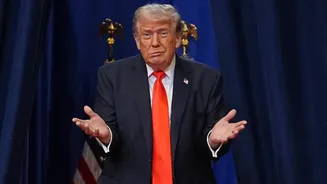
The letter highlights the contentious issue of presidential authority in matters of war, as Trump initiated military operations without congressional approval two months prior. In the letter, Trump stated, “The hostilities that began on February 28, 2026, have terminated,” addressing House Speaker Mike Johnson and Senate President Pro Tempore Chuck Grassley.However, Trump indicated that the conflict may not be entirely resolved, noting that “the threat posed by Iran to the United States and our Armed Forces remains significant.” This reflects ongoing tensions despite the administration's claims of success in military operations against the Iranian regime.
Legal Implications of the War Powers Resolution
The War Powers Resolution of 1973 mandates that Congress must either declare war or authorize military force within 60 days of engagement. As Friday marked this deadline, Congress had not made any attempts to enforce this requirement before adjourning for a week, following a failed Democratic proposal to halt the war for the sixth time.The Trump administration contends that the war effectively ended with a ceasefire in early April, arguing that the deadlines set by the law do not apply. Senate Majority Leader John Thune stated he did not foresee a vote on authorizing military force in Iran, expressing that he is listening to conference members and does not anticipate action at this time.
Diverse Opinions Among GOP Senators
Some Republican senators are voicing the need for congressional oversight regarding military actions. Senator Lisa Murkowski of Alaska announced plans to introduce a limited authorization of military force when the Senate reconvenes, contingent upon the administration presenting a credible plan.Senator Kevin Cramer of North Dakota expressed willingness to support an authorization if requested by Trump, while questioning the constitutionality of the War Powers Resolution. He remarked, “Our founders created a really strong executive, like it or not.” Meanwhile, several other GOP senators, including Susan Collins, have indicated a desire for Congress to have a role in authorizing military actions.
Administration's Position on the Ceasefire
The Trump administration argues that the ongoing ceasefire pauses the 60-day clock established by the War Powers Resolution. During a congressional hearing, Defense Secretary Pete Hegseth stated, “We are in a ceasefire right now, which our understanding means, the 60-day clock pauses or stops.” This position raises concerns among Democrats who argue that military operations continue despite the ceasefire.Senator Adam Schiff of California highlighted that military assets remain operational, emphasizing that halting certain military actions does not negate the ongoing military presence. Democratic representatives have expressed skepticism regarding the administration's adherence to legal requirements, with Washington Representative Adam Smith noting, “Is the expectation that the Trump administration is going to follow the law? I do not have that expectation.”