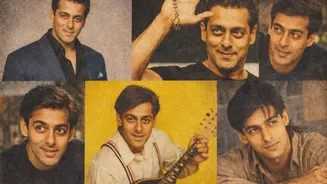

There was a Salman Khan most millennials grew up with and falling for him was effortless. He was Prem. The soft-spoken, sanskari, hopeless romantic who
danced to Mere Rang Mein Rangne Wali, made weddings feel incomplete without Hum Aapke Hain Kaun and had us all secretly humming O O Jaane Jaana. He was the good boy on screen, the ideal lover, the man who made an entire generation believe that love could be gentle, respectful and unwavering. But then something changed. Somewhere along the way, it became uncool to say you liked Salman Khan. Say it out loud in a room full of people today and you are likely to be met with raised eyebrows, awkward pauses or the inevitable- “What! Salman Khan? How can you like him?” And no, this isn’t just about box office flops, every superstar has had those. This is something else. A sharper, more deliberate distancing. Almost a moral positioning. So what happened?
Salman Khan: The Man Who Didn’t Fit the Narrative
Perhaps the biggest reason Salman Khan became so easy to hate is because he failed to live up to the 'good boy' image in real life.
His run-ins with the law, the cases, the headlines, these didn’t just dent his image, they shattered the illusion. And once that illusion broke, there was no coming back for most. In public imagination, he became the man many were convinced was guilty, convinced didn’t pay enough for his actions and convinced got away because of privilege.
And here’s the uncomfortable truth: people rarely leave room for complexity.
What’s interesting is how selectively indifferent people become. When his charity work is mentioned, there’s a shrug. When industry insiders like Bobby Deol talk about how he helped them come out of a lean phase and back into work, there’s silence. When stories emerge of his loyalty to friends, his fierce protectiveness of family or the way he treats women, with respect so conscious that even his public hugs are fists-closed, it’s dismissed as PR. And maybe that’s because once we have decided someone is the villain, acknowledging their humanity becomes inconvenient.
Does that erase the mistakes? Of course not. But it does raise a question: why are we so determined to flatten him into one version of the story?
The Cost of Being Salman Khan
Being a celebrity at Salman Khan’s scale means your failures are not private, they are public spectacles. Trials stretch for years. Media scrutiny becomes relentless. Your worst moments are replayed endlessly, long after the legal outcomes are delivered. Again, this isn’t about absolution. It’s about recognising that we are often far more eager to punish than to understand.
And perhaps hating Salman Khan has become a kind of social currency, especially in elite circles. It signals moral superiority. Liking him, on the other hand, is seen as tasteless, regressive or ignorant. As if art, nostalgia and personal impact must always align perfectly with real-life conduct. But human beings and cultural icons are rarely that neat.
I have learned to say it anyway: I am a Salman Khan fan. Yes, it still raises eyebrows. Not because I excuse everything. But because I hold space for the Prem I grew up with, the man who shaped how a generation imagined romance. The man who made many of us believe that there could be a Prem for us too.
And maybe that’s what unsettles people most that we refuse to erase the impact of art, even when the artist is flawed.
So today, on his birthday, I will say this:
Happy Birthday, Salman Khan.
And for everyone else - remember don’t trouble your mata, pita or Bharat Mata.
Signing off.