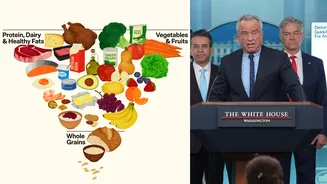








The White House on Wednesday released the 2025–2030 Dietary Guidelines for Americans, described by officials as the most significant reset of federal nutrition
policy in decades. The new guidance reflects the “MAHA” (Make America Healthy Again) movement led by US Health and Human Services Secretary Robert F. Kennedy Jr., with a clear message: “eat real food.” Health officials said earlier guidelines had effectively prioritized highly processed foods, contributing to a national health crisis. According to the US Department of Health and Human Services, more than 70% of American adults are overweight or obese, nearly one in three adolescents has prediabetes, and close to 90% of U.S. health care spending goes toward treating chronic disease linked to diet and lifestyle.
BREAKING: The Trump Administration announces the 2025-2030 Dietary Guidelines for Americans, putting REAL FOOD back at the center of health. 🇺🇸https://t.co/tkGF01onpm pic.twitter.com/1zTLSKdE7R
— The White House (@WhiteHouse) January 7, 2026
The updated guidelines reintroduce a food pyramid, now shown as an inverted pyramid, and move away from the MyPlate model. Officials say following the new recommendations can help prevent or slow the progression of chronic diseases by shifting Americans toward whole, nutrient-dense foods and away from ultra-processed products and added sugars.
What’s Inside The New Food Pyramid?
The 2026 food pyramid emphasizes simple, flexible guidance centered on whole foods. Protein is placed at the forefront, with officials calling it the end of the “war on protein.” The new recommendation is based on body weight, advising 1.2 to 1.6 grams of protein per kilogram per day—roughly 81 to 109 grams daily for a 150-pound person.
The pyramid highlights meats, cheese, dairy, and vegetables in the widest section, visually flipping decades of dietary advice. Full-fat dairy with no added sugars is encouraged, with three servings per day recommended for a 2,000-calorie diet. Healthy fats are also emphasized, with guidance to prioritize oils containing essential fatty acids, such as olive oil, while also allowing options like butter or beef tallow.
Americans are advised to eat vegetables and fruits throughout the day, aiming for three servings of vegetables and two servings of fruit daily. Whole grains remain part of the diet, with two to four servings per day encouraged, alongside a sharp reduction in refined carbohydrates.
Ultra-processed foods are singled out for limitation. The guidelines advise avoiding highly processed packaged and ready-to-eat foods high in added sugars and sodium, such as chips, cookies, candy, and sugary drinks, and instead prioritizing nutrient-dense, home-prepared meals. Water and unsweetened beverages are recommended, and alcohol intake should be limited for better health.
The guidelines also include tailored recommendations for infants, children, adolescents, pregnant and lactating women, older adults, people with chronic disease, and vegetarians and vegans, ensuring nutritional adequacy across life stages.
How Are MAHA Dietary Guidelines Different From Old Food Pyramid?
- The 2020 dietary guidelines focused on calorie percentages, low-fat dairy, and broad nutrient targets.
- MAHA guidelines are shorter, more direct, and supported by separate research documents.
- Protein recommendations have shifted from calorie-based targets (5%–35% of daily calories) to a body-weight-based approach.
- The new guidance moves away from recommending low- or fat-free dairy for everyone over age two, allowing full-fat dairy with no added sugars.
- The recommendation to keep saturated fat below 10% of daily calories remains, though officials say more high-quality research is needed on which fats best support long-term health.
- The MAHA food pyramid replaces both the traditional upright pyramid and the MyPlate model with an inverted pyramid.
- The new visual prioritizes protein, dairy, vegetables, and healthy fats.
- There is a stronger emphasis on limiting ultra-processed foods and added sugars compared with previous guidelines.
- The guidance continues to encourage Americans to reduce alcohol consumption.