




As the US House of Representatives prepares to vote on legislation that could empower President Donald Trump to imposetariffs of up to 100 per cent on countries
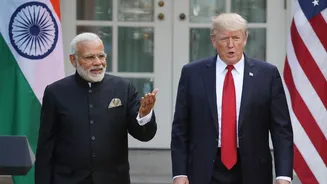
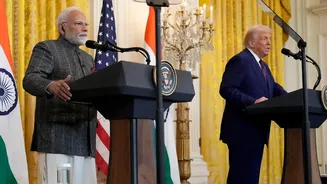
purchasing Russian oil and gas, including India, the government has already begun preparing for possible economic fallout, sources told Times Now. "A country is never without a plan," government sources told Times Now when asked about New Delhi's contingency strategy if the US moves ahead with the proposed 100 per cent tariff on Indian goods. Sources said India had begun preparing for such scenarios even when Trump had earlier threatened to impose a 50 per cent tariff on Indian imports. "Last time when Trump said 50 per cent tariff on India, we had contingency plans. We had explored new markets. The Ministry had started reaching out to exporters to understand how they could be helped," the sources said.
Why India's approach assumes significance
The government's approach comes amid growing global concerns over the use of trade and economic measures as instruments of geopolitical pressure. Since April 2025, the US has used tariff threats and implementation as a core economic strategy, leading to major global trade disruptions and legal challenges.
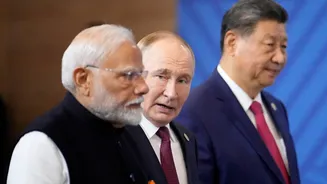
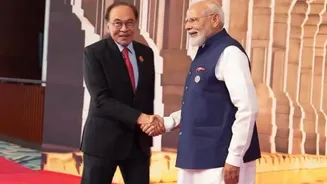
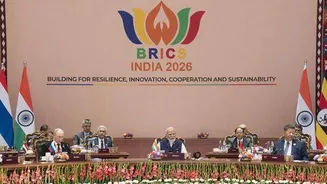
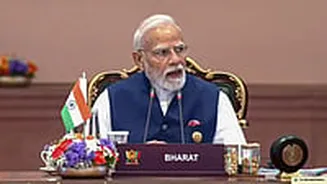
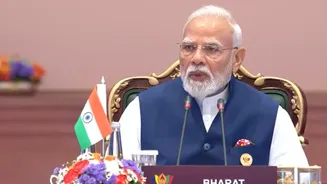
At the BRICS summit hosted by New Delhi recently, Prime Minister Narendra Modi and Russian President Vladimir Putin were among the leaders who spoke about the uncertainty facing the global economy and the need for greater economic cooperation. Iranian President Masoud Pezeshkian also stressed that economic security is equal to national security and called for economic instruments not to be used to politically pressure countries.
Discussions also focused on expanding avenues for economic cooperation, market access and trade among member countries.
These deliberations assume added significance now as India faces the possibility of higher US tariffs and seeks to strengthen alternative markets and economic partnerships beyond traditional Western markets.
The Lindsey O. Graham Sanctioning Russia and Iran Act of 2026 cleared a key procedural hurdle on Tuesday evening in a 214-211 vote, after two Democrats broke ranks to back the measure alongside Republicans.
The bill is expected to come up for a final vote in the House on Wednesday.