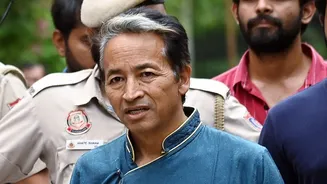




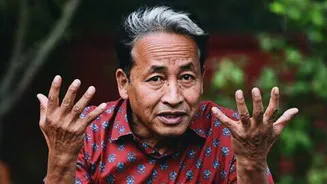

Environmentalist and activist Sonam Wangchuk, days after he apologized for his remark comparing Ladakh and Tibet over September 2025 violence in Leh, said
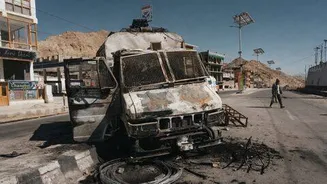
that his intentions were never to compare it with the situation in Tibet but added it was a "black spot on India's democracy". The climate activist had made the comparison on Thursday when he was addressing people in Leh on the first anniversary of September 24 violence in Leh - held last year - when police allegedly resorted to firing on protesters demanding Sixth Schedule Status and Statehood. At least four people had lost their lives in the incident while several others were injured. However, the Central Tibetan Administration (CTA) in Dharamshala objected to Wangchuk's remarks on Ladakh and Tibet as “misplaced” and “inaccurate” following which the activist had apologised. Now days after the matter escalated, when asked exclusively by Times Now Digital if there is a need for a deeper discussion in this matter, Wangchuk said he has apologised for comparing it with those who understood it as in comparison with the entire suffering that Tibet has gone through over, like, 8 or 9 decades.
What Did Wangchuk Exactly Say
Wangchuk had said that he feared an encounter for speaking out against what he called atrocities in Ladakh, adding, "Today such atrocities (referring to Leh September 2025 incident) are being committed in Ladakh that even China is not doing in Tibet."
It was after Wangchuk’s remarks that CTA spokesperson Tenzin Lekshay said it was inaccurate to compare Ladakh and Tibet. Lekshay said said, "Tibetans continue to remain under China’s authoritarian rule. Tibetans face systematic repression of fundamental rights and religious freedom along with measures aimed at erasing their distinct cultural identity."
"My intention was never to compare it with that. It was just a specific incident on September 21 that I was comparing to what happens anywhere in the world, the worst, and not on a whole suffering faced by a civilization," Wangchuk said.
Adding further on this, Wangchuk said that so there, it’s not comparable. However, the environmentalist added that if we go by incident to incident, yes, it's a shame. "It's a black spot in the history of India's democracy that people can be so mercilessly massacred, you know, in framed conditions like we saw in Ladakh."
Therefore, Wangchuk said he believes that it's as bad as it can get anywhere in the world.
"But at the same time, I have great sympathy and love for the people in Tibet who suffer much more over many more decades. So therefore, pain being subjective, it's very difficult to compare,” he added.
Wangchuk said that for Ladakhis, September 24 was the worst it can ever be. And for others, their pain must be the biggest. “So it's best, I understood, not to compare and belittle neither Ladakh's pains nor any other struggles," he said.
What Happened in Leh in September 2025
On September 24, 2025, Leh witnessed the tragic events when four people lost their lives amid police retaliation, after the protestors set a political party's office on fire. The protests were a result of people demanding statehood and inclusion of Ladakh under the Sixth Schedule, which turned into clashes with the police officials in Leh.