







What is the story about?
JOHANNESBURG (AP) — On May 1, while South Africa celebrated Labor Day, infectious disease specialist Lucille Blumberg received an urgent email regarding
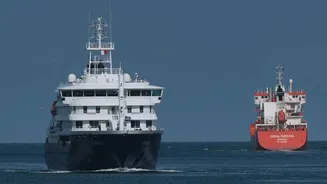
a passenger from a cruise ship in the Atlantic Ocean. The individual had been evacuated and admitted to a Johannesburg hospital with suspected pneumonia, alongside other sick passengers on the vessel. The communication came from a colleague in the U.K. who monitors diseases in remote British territories, prompting Blumberg and her team at the National Institute for Communicable Diseases to investigate the outbreak aboard the Dutch cruise ship MV Hondius.
Initial Response and Diagnosis
Upon receiving the urgent request, Blumberg and her colleagues quickly mobilized, despite it being a public holiday. “Even though it was a public holiday, we moved, we moved really fast,” Blumberg stated. “It was busy. There were many conversations. There were online discussions, and there was laboratory testing happening at the time.” Within 24 hours, they identified hantavirus as the cause of the man's illness.Investigating the Outbreak
The elderly British man had been hospitalized days after his evacuation from the cruise ship. Although two elderly Dutch passengers had died prior to his evacuation, the situation did not initially raise alarms. Health authorities on Ascension Island had reported the illnesses as pneumonia to the World Health Organization (WHO).Blumberg and her team first considered other potential causes, including Legionella and bird flu, given the passengers' travel history. However, tests for these pathogens returned negative results, prompting further investigation into the ship's origins and passenger activities.
Collaboration and Confirmation
Focusing on the ship's journey from Argentina and the passengers' interests in bird watching, the South African experts began to suspect hantavirus. “It’s a well-described, not common, but it’s a well-described virus in Chile and Argentina,” Blumberg noted. Collaboration with hantavirus specialists from South America and the U.S., facilitated by the WHO, enhanced their investigation.On Saturday morning, Blumberg contacted the only South African laboratory capable of testing for hantavirus. After confirming the positive results from the man's blood samples, the WHO was informed about the outbreak on the cruise ship.
Identifying Additional Cases
The identification of hantavirus allowed the WHO to alert the cruise ship about the outbreak. While the virus is not easily transmitted between individuals, the Andes strain identified can be spread under certain conditions. Following the test results, Blumberg sought blood samples from a Dutch woman who had disembarked with her deceased husband and later passed away in South Africa, which also tested positive for hantavirus.“It was a bit of a wow moment,” Blumberg expressed. “And at least once you know what you’re dealing with, it’s much easier to respond.” The British patient is reportedly improving in the hospital, while the cruise ship has returned to Rotterdam for disinfection and crew disembarkation.