






Donald Trump has once again made his fascination with Greenland unmistakably clear. The former—and now returning—US president has claimed that his administration
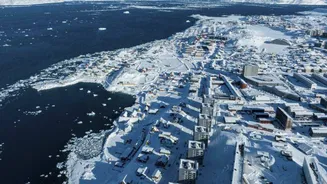
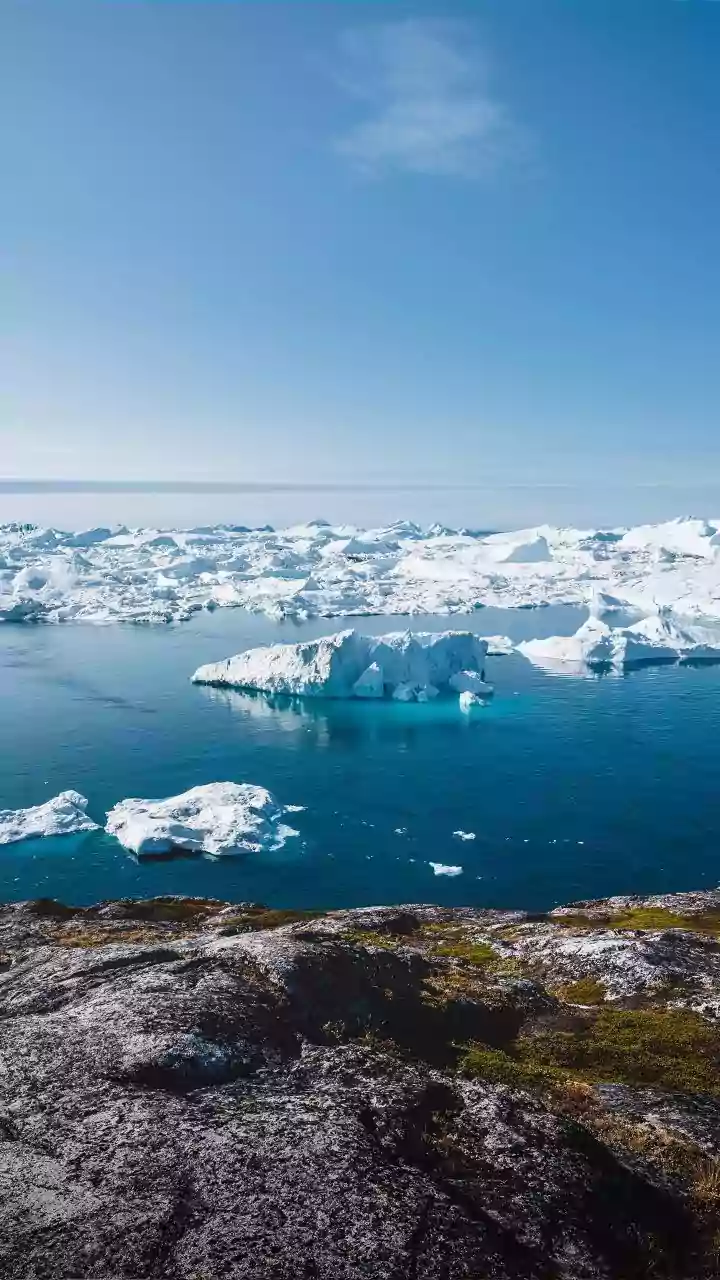
has secured the “framework” of a future agreement focused on defence cooperation on the island. According to Trump, this framework also includes access to Greenland’s rare earth minerals. But beyond the headlines and rhetoric, what exactly does Greenland offer in terms of natural resources—and why does it matter so much to Washington? A Treasure Trove Beneath the Ice Greenland is believed to sit atop substantial reserves of oil and natural gas, though most remain unexplored due to the island’s harsh climate and logistical challenges. More strategically significant, however, is its mineral wealth. The island hosts an extraordinary range of critical raw materials—the building blocks of modern technology. These minerals are essential for electronics, renewable energy systems, advanced weapons, and other high-tech applications central to both economic competitiveness and national security. According to the 2023 Geological Survey of Denmark and Greenland, the island contains 25 of the 34 minerals classified as “critical” by the European Commission. These include graphite, niobium, titanium, and several rare earth elements crucial for electric vehicles, wind turbines, semiconductors, and military hardware, said a BBC report. At a US Senate hearing last year, Republican Senator Ted Cruz underscored Greenland’s importance, saying its value extended far beyond defence installations and into its “vast reserves of rare earth elements.” Security First—At Least Publicly Despite the mineral riches, Trump has often framed his interest in Greenland as a matter of national security rather than resource extraction. Speaking at the World Economic Forum in Davos, he argued that the island’s importance lies in countering growing Russian and Chinese influence in the Arctic. “I want Greenland for security. I don’t want it for anything else,” Trump said, pointing to the immense difficulty of mining in Arctic conditions. He highlighted the challenge of drilling through thick ice layers, suggesting that the resources themselves were not easily exploitable or immediately attractive. Yet behind the scenes, access to Greenland’s natural wealth has remained a central consideration. READ MORE:Is Trump Set to Roll Back 25% Tariffs on India? US Treasury Chief Drops Hint Countering China’s Rare Earth Dominance China currently dominates the global rare earth supply chain, from mining to processing. Reducing US dependence on Beijing has become a major strategic goal for successive American administrations—but especially for Trump’s, which places economic strength at the heart of its geopolitical strategy. Steven Lamy, professor of international relations at the University of Southern California, argues that Greenland is central to this effort. “Trump’s interest is primarily about access to resources and preventing China from getting them,” Lamy said. This strategic logic explains why the US has steadily increased its presence in Greenland in recent years. In 2020, Washington reopened its consulate in Nuuk, the island’s capital, citing the need to respond to expanding Russian and Chinese activity in the Arctic. Melting Ice, Rising Opportunities Since Trump’s return to office, his allies have increasingly emphasized Greenland’s commercial potential, particularly as climate change reshapes the Arctic. Rising temperatures are opening new shipping lanes, expanding fishing opportunities, and making previously inaccessible mineral deposits easier to reach. Energy resources, rare earth minerals, and Arctic logistics have all been framed as vital to future defence and economic planning. Mike Waltz—then Trump’s national security adviser and now US ambassador to the UN—summed it up bluntly during a visit to US troops stationed in Greenland. WATCH HERE:
“This is about shipping lanes. This is about energy. This is about fisheries,” Waltz said, adding that Greenland also plays a key role in monitoring adversaries and safeguarding US security.
Louisiana Governor Jeff Landry echoed this view, describing Trump as a “business president” who sees Greenland as a “robust trading opportunity.”
Turning Interest Into Investment
Last summer, the Trump administration approved the possibility of backing a US mining project in Greenland, offering $120 million (£90 million) in financing through the Export-Import Bank of the United States. The move built on similar agreements with Australia and Japan aimed at securing non-Chinese rare earth supply chains.
Dr Patrick Schröder of Chatham House noted that Greenland’s mineral potential could significantly reduce US reliance on China if developed at scale.
“The size of these resources could genuinely shift the dial,” he said.
Enormous Potential, Enormous Challenges
Still, critics argue that US control of Greenland is not necessary to access its resources. Moreover, exploiting them remains extremely difficult.
Mining in Greenland is expensive and constrained by severe weather, limited infrastructure, and a small workforce. Despite more than 100 exploration permits, only two mines are currently operational.
“Greenland has tried for decades to attract foreign investment,” said Mikkel Runge Olesen of the Danish Institute for International Studies. “The problem is not the lack of minerals—it’s the cost of extracting them.”
READ HERE: Are There Penguins In Greenland? Trump's Latest Meme On Danish Territory Sparks Mockery
However, climate change may alter that equation. According to Prof Andrew Shepherd, director of the Centre for Polar Observation and Modelling, melting ice is exposing new rock formations and creating river runoff that could support hydropower, making mining more feasible.
Jennifer Spence of Harvard’s Arctic Initiative cautions that, for now, Greenland’s mineral boom remains speculative.
“It’s still all about potential,” she said. “But its shipping location and rare earths are undeniably drawing attention.”
Security or Economics?
While Trump publicly frames Greenland as a security necessity, analysts increasingly believe the motivation is economic as much as strategic.
“His logic is national security,” Spence said. “But my belief is that this is far more economically driven.”
In reality, Greenland represents a rare convergence of geopolitics, resources, climate change, and great-power competition—making it one of the most strategically significant pieces of land on Earth, even if much of its value still lies frozen beneath the ice.