






The Tamil Nadu government on Monday moved the Supreme Court in the latest round of the Cauvery water dispute, arguing that Karnataka has sufficient water storage
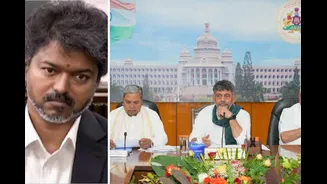
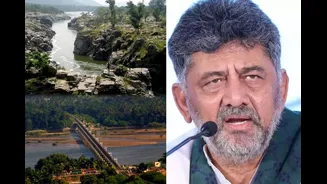
to release the state's due share and that the quantity ordered by the Cauvery Water Management Authority (CWMA) is inadequate. In its plea, Tamil Nadu has said that as of August 3, the four major reservoirs in Karnataka - Krishna Raja Sagar (KRS), Kabini, Harangi and Hemavati - together hold around 77 TMC of water. The state has argued that Karnataka should therefore face no difficulty in releasing water to Tamil Nadu in accordance with the Cauvery water-sharing framework. Tamil Nadu has further submitted that it should ideally receive 26 TMC of water at Biligundlu, the interstate gauging point on the Karnataka-Tamil Nadu border. However, the recent CWMA direction effectively providing only around 4.5 TMC of water is insufficient to meet the state's requirements, particularly in the Cauvery delta region where farmers depend on timely releases for cultivation. The legal move marks a fresh escalation in the long-running dispute between the two southern states. The Cauvery Water Management Authority (CWMA) recently upheld the Cauvery Water Regulation Committee's direction requiring Karnataka to release water to Tamil Nadu, a decision that triggered strong reactions in Karnataka and prompted discussions on possible legal options. The dispute comes amid renewed political tensions over both water releases and the proposed Mekedatu balancing reservoir project. Karnataka has continued to defend the Mekedatu project as a long-term solution to water management issues, while Tamil Nadu has strongly opposed it, arguing that it could adversely affect downstream flows and violate existing water-sharing arrangements. The latest court battle follows weeks of heightened activity on the Cauvery front. Efforts to resolve the issue through political dialogue also suffered a setback after a proposed meeting between Tamil Nadu Chief Minister C Joseph Vijay and Karnataka Chief Minister DK Shivakumar was postponed amid the prevailing tensions. The Cauvery dispute remains one of India's most contentious interstate river conflicts. The Supreme Court's 2018 verdict and the subsequent establishment of the CWMA created a framework for water sharing, but disagreements over releases during periods of variable rainfall continue to trigger legal and political confrontations.