



The United States has issued a fresh security advisory for Americans across the Middle East, warning of escalating regional tensions linked to the ongoing
conflict with Iran and urging citizens to be prepared for potential evacuations, flight cancellations and sudden travel disruptions. The advisory comes as US President Donald Trump threatened further military strikes on Iran, while fresh security incidents were reported in Kuwait, the Strait of Hormuz and the Gaza Strip, signalling that the conflict continues to widen. In its latest alert, the US State Department advised American citizens currently in the Middle East to “exercise caution and heightened vigilance" and remain prepared for deteriorating security conditions. Americans in the region were urged to consider departing or be ready to leave should the situation escalate further. The advisory warned that commercial flight cancellations, periodic airspace closures and other travel disruptions remain possible, adding that several airlines have postponed the resumption of normal flight schedules while others have cancelled routes across the region. The State Department also advised Americans travelling to or from the Middle East to closely monitor airport and airline operations before making travel plans.
US Warns Of Possible Attacks On American Interests Worldwide
The security alert extended beyond the Middle East, warning that Iran and groups aligned with Tehran could target American diplomatic facilities, businesses and institutions across the world.
The State Department noted that US diplomatic missions, including those outside the Middle East, have already been targeted in recent months.
“Iran and groups supportive of Iran may target other US interests overseas or at locations associated with the United States and Americans throughout the world, including US businesses and other institutions," the advisory said.
The warning applies to Bahrain, Israel, Iraq, Jordan, Kuwait, Lebanon, Oman, Qatar, Saudi Arabia and the United Arab Emirates.
Americans outside the Middle East were also urged to “seriously reconsider travel to and through the region" until tensions ease.
Trump Threatens More Strikes On Iran
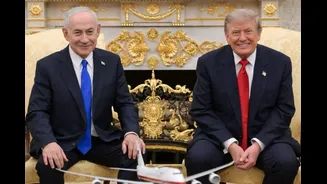
The advisory was issued hours after Trump warned that the United States was prepared to continue military action against Iran.
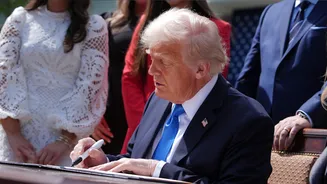
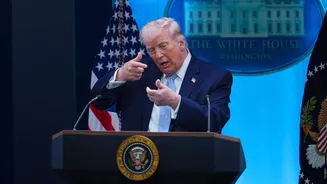
According to the Associated Press (AP), Trump told reporters during a Cabinet meeting at the Camp David presidential retreat that the US would continue striking Iran if necessary.
“We just want to win," Trump said, adding that the United States would hit Iran “very hard" until it “can’t take it anymore," AP reported.
White House Press Secretary Karoline Leavitt later accused Tehran of violating an earlier truce understanding with Washington.
According to AP, Leavitt alleged that Iran had signed a memorandum of understanding with the US but later “broke it, shot at commercial ships, and killed American soldiers."
“President Trump is not going to stand by and allow this terrorist behaviour to occur. Iran will continue to pay until they come to the table in what President Trump deems a meaningful way," she said, according to AP.
Conflict Expands Across Gulf And Gaza
The latest US advisory comes amid fresh violence across multiple fronts in the Middle East.
According to AP, Kuwait said on Saturday that its military responded to a new round of Iranian drone attacks targeting several vital facilities, including a government building in the country’s north. Authorities said no casualties were reported.
Meanwhile, the British Navy reported two separate maritime security incidents in the Strait of Hormuz, one of the world’s most strategically important shipping routes.
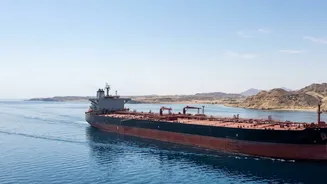
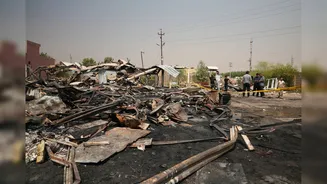
AP reported that an unidentified projectile struck a tanker near Oman, damaging its engine room, while another explosion occurred close to a separate vessel near Khasab. No casualties were reported in either incident.
Separately, satellite images reviewed by AP showed crude oil leaking from a sanctioned tanker grounded off the coast of Oman near a protected marine area.
The Strait of Hormuz has remained a major flashpoint throughout the conflict, with AP reporting that Iran has repeatedly targeted vessels attempting to transit the strategic waterway without its authorisation.
Israeli Strikes Continue Despite Hamas Disarmament Announcement
The conflict also intensified in Gaza despite a potential diplomatic breakthrough. According to AP, Hamas confirmed on Friday that it had agreed to disarm under a US-brokered ceasefire framework announced last October.
The proposed agreement calls for Hamas to surrender its weapons, transfer governing authority to an independent Palestinian administration, while Israeli forces would withdraw and an International Stabilisation Force would be deployed.
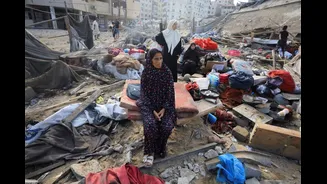
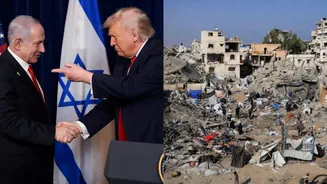
However, despite the announcement, Israeli forces launched heavy overnight strikes across central and northern Gaza.
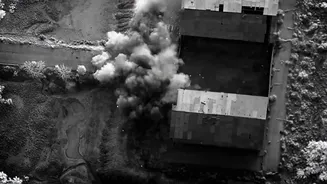
AP reported that at least four people were killed and dozens injured in the attacks, while Israel’s military said it struck Hamas targets and destroyed five weapons storage facilities.
Reacting to the proposed agreement, Israeli far-right lawmaker Itamar Ben-Gvir described the deal as “unacceptable" and said military operations should continue, according to AP.
Egypt, which has played a key mediating role in ceasefire negotiations, welcomed what it described as Hamas’ “positive response" to the phased peace proposal, AP reported.
Regional Security Concerns Continue To Grow
The latest developments highlight growing fears that the conflict could spread further beyond Iran and Israel.
In addition to the fighting in Gaza and rising tensions in the Gulf, AP reported that Yemen’s Houthi rebels claimed they forced several Saudi ships to reroute away from the Bab el-Mandeb Strait after announcing a blockade on Saudi shipping.
In southern Lebanon, Israeli forces also destroyed an underground tunnel network beneath the historic Beaufort Castle, claiming it had served as a Hezbollah command centre.
Lebanon’s President Joseph Aoun criticised the operation, saying it sent “negative messages" ahead of planned negotiations between Israel and Lebanon in Rome, AP reported.