





What is the story about?
The Parliamentary arithmetic is in focus once again. The NDA-led government has called a special session of Parliament on November 30, in order to renew
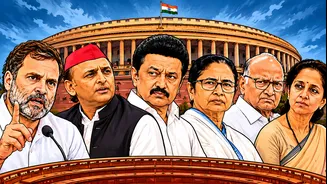
their push for the contentious delimitation bill, alongside 33% reservation for women MPs. The opposition now, is fragmented. Some sternly against, some on the fence while a few have started walking across the aisle.
Those In The Hard No
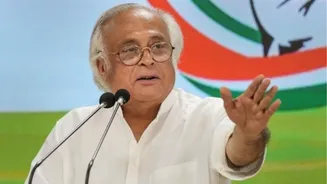
The Congress remains the loudest opponent. It rejects the bill in its current form and has set out four conditions: keep the 543 seats, preserve state-wise representation, deliver women's reservation within the existing strength, and freeze the arrangement for 25 years. MP Jairam Ramesh has also pressed for an all-party consultation.
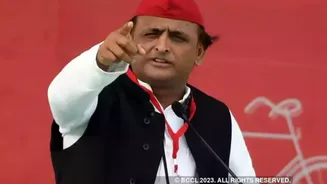
The Samajwadi Party objects on federal representation and gerrymandering grounds. The CPI(M) backs women's reservation but wants it separated from delimitation. AIMIM's Asaduddin Owaisi calls the proposal a threat to federalism and warns that power would concentrate in more populous states. The RSP has called it an attack on federalism dressed up as women's reservation. AAP, with three MPs, is reportedly likely to oppose it too.
Those On The Fence
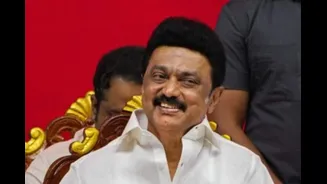
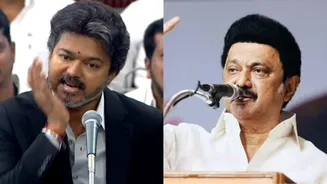
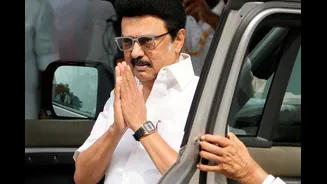
The real action is near the fence. The DMK, with 22 MPs, has moved furthest since April. Two senior leaders have reportedly signalled support if Tamil Nadu's roughly 7.2% share of Lok Sabha seats is protected. DMK chief MK Stalin has reiterated the party's two key demands over the proposed delimitation exercise, making it clear that Tamil Nadu's share of parliamentary representation must not be reduced and the existing proportion of seats among states must remain protected for another 25 years.
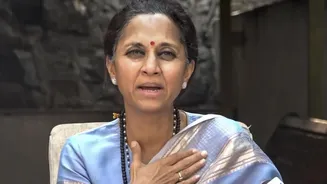
The NCP (SP), with eight MPs, has set a different price. Supriya Sule has said the party could support the bill if every state gets a uniform 50% increase, with no population-based changes to the existing split. She has also said the party must first see the actual legislation. It has issued a whip for all eight MPs to be present from November 30 to December 4. The YSRCP, with four MPs, is set to back the bill and expects a 50% pro-rata increase across states.
Congress leaders have publicly urged the DMK and NCP (SP) not to back what they call a new version of a failed bill.
Undecided, But For How Long?
The Opposition's arithmetic has also been scrambled from within. 20 Trinamool MPs rebelled and merged with the Nationalist Citizens Party of India and are now set to add weight to the NDA's cause. The eight MPs loyal to Mamata Banerjee oppose the government's approach, but remain fragmented.
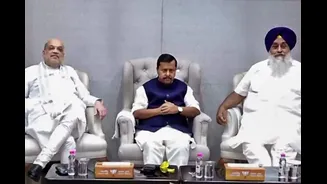
Six Shiv Sena (UBT) MPs have moved to the Shinde faction, and the Shiromani Akali Dal has drifted closer to the NDA. The Biju Janata Dal has no Lok Sabha MPs but has historically charted its own course. Its leadership says Naveen Patnaik will decide after consultations. The RJD has no formal position, and the JMM has questioned the timing of the sitting.
The Abstinence Factor
The count is 540 seats. Two-thirds majority and the magic number needed is 360. Taking reports into account that the DMK, NCP (SP) and YSRCP are likely to vote in favour of the bill, the number the NDA gets is 354, leaving a shortfall of 6.But if any of the remaining 186 MPs in Lok Sabha abstain or are absent for the vote- the calculation then takes a hit again. Because when voting MPs are absent, the total count is reduced by that many- and so is the corresponding two-thirds number. If for example, five of the 540 MPs were to be absent or to abstain, the count then is 535: bringing the magic number down to 357.