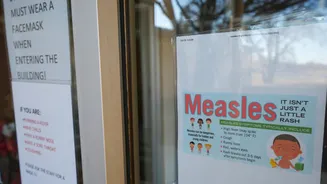








New York Governor Kathy Hochul declared a statewide State Disaster Emergency on Monday in response to a growing number of measles cases across rural areas
of the state and neighboring states. As of October 3, New York has reported 108 confirmed measles cases this year, including seven in New York City and 101 elsewhere in the state. Since July 15, 92 cases have been reported among under-immunized rural communities across 18 counties. The emergency declaration comes as measles cases continue to rise in the US and globally. According to the executive order, neighboring Pennsylvania is also battling a rapidly spreading outbreak, with 977 cases and five deaths recorded as of October 2. Pennsylvania health officials said Monday that the state's total had surpassed 1,000 cases, making it the largest state outbreak in more than three decades.
Emergency Order Expands Access To MMR Vaccines
Since July 15, local health departments in rural areas of New York have administered more than 1,000 doses of the measles-mumps-rubella (MMR) vaccine.
Hochul's executive order expands the network of health professionals allowed to administer vaccines, adding paramedics, advanced EMS personnel, midwives and pharmacists. Pharmacists will be permitted to vaccinate children as young as two.
The order also allows registered nurses to order tests for suspected measles cases. All MMR vaccinations must be reported to New York State or New York City immunization registries within 72 hours, with adult consent for such reporting waived. Vaccination itself still requires consent from the patient or a legal guardian.
"After reviewing the latest data on measles cases in New York State, I am declaring a State Disaster Emergency to strengthen our ongoing efforts to confront this disease," Hochul said. "No one should get seriously ill or die from a vaccine-preventable disease."
The emergency took effect Monday and will remain in place through November 4.
The governor also received her flu shot Monday and urged all New Yorkers to do the same.
The US is experiencing its worst year for measles since 1991, with nearly 3,900 cases reported, according to the Centers for Disease Control and Prevention.