
Among the complex patterns that comprise Russian history, there are very few lives that encompass both the era preceding the revolution and the height
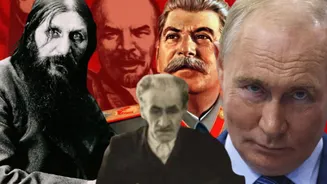
of Soviet power as intriguing as that of Spiridon Ivanovich Putin. Born on December 19, 1879, and living for exactly 86 years, until December 19, 1965, Spiridon was a Russian chef who was able to find himself in the company of some very influential men in the 20th century. As the grandfather of Russia’s leader Vladimir Putin on his father’s side, his story presents a very important insight into the living reality behind the monumental narrative of revolution and dictatorship. Spiridon’s life journey from modest origins in the province of Tver to catering meals for such important personalities as Grigori Rasputin, Vladimir Lenin, and Joseph Stalin testifies about the unpredictable course people’s life trajectories can take within their historical environment. This piece examines his biography in great detail using verified documentation and stories passed down by his family about how a common cook became involved in a network of individuals credited as building modern Russia. Early Life and Culinary Beginnings Spiridon Putin was born in Tver Province in a poor family that existed in the last days of Tsarist Russia. The limited information on his youth years is that just like all young people from poor backgrounds; he migrated to the cities in search of better chances in life. Spiridon had moved to Saint Petersburg, which was the Imperial capital, where he apprenticed as a chef and gained employment in upmarket restaurants, including the famous Hotel Astoria, which was opened in 1912 and was a refuge for royalties, philosophers, and other notable figures during that era. This is where Spiridon got the chance to learn about Russian cuisine, Western cuisine, as well as the secrecy that is expected within such elite circles. The name Spiridon therefore emerged in Russia during a time when Russia was on the verge of the revolution of 1917. A Chance Encounter with Grigori Rasputin One such eventful incident in Spiridon’s life is linked with a mystic named Rasputin. This person gained unparalleled influence over Tsar Nicholas II. At the time when Spiridon was employed by the Hotel Astoria, he got the opportunity to cook dinner for Rasputin. Rasputin is renowned for his quirky nature and hearty appetite. Rasputin allegedly was satisfied with his meal to the extent that he tipped Spiridon a gold ruble. Rasputin allegedly joked with Putin about their family names sounding alike when Putin and Rasputin considered it an unusual coincidence. Despite the fact that it lasted only a few moments, it marked Spiridon’s rising importance in Saint Petersburg’s culinary circles. This imperial intrigue came to a close with Rasputin’s death in 1916. However, Spiridon’s own story would soon take a new turn with the Russian Revolution. Becoming Lenin’s Personal Chef Spiridon soon moved to Moscow after the Bolsheviks took power in 1917. The city was now the capital of the Soviet Union. Soon after Spiridon settled in Moscow, his skills were discovered by the leaders of the revolution, who promptly appointed him to take on the task of personal chef to Vladimir Lenin. Spiridon cooked for Lenin, his wife Nadezhda Krupskaya, and their family in places like the Kremlin apartments and the estate of Gorki Leninskiye. This was the stage of civil war and food shortages, yet Spiridon was able to metamorphose himself to conform to the ascetic life led by the early leaders of the Soviet Union and took much time to prepare nutritious food which was easy to make. He continued working for Krupskaya and the family of Lenin, including Maria Ulyanova and Dmitry Ulyanov, after the death of Lenin in January 1924. All these were as a result of the good name he had made for himself. Service to Joseph Stalin and the Soviet Elite Spiridon’s own life soon took a new turn with the emergence of Joseph Stalin. Despite the problems that existed between Stalin and Krupskaya, Spiridon sometimes cooked for him when he visited. Spiridon began working in one of Stalin’s country houses, which was close to Moscow, as a cook for Stalin and his top-ranking officials in the 1940s. Nevertheless, the position comes with aargesponsibility and stress related to it. This was an era of paranoia and purges, and the kitchen workers were protected by NKVD from possible poisoning and sabotage. This is seen in the fact that he managed to maintain his position despite the political turmoil. Russian President Vladimir Putin recently spoke about the fact that as a mere lad, accompanying his father to the dacha, he had seen the luxury of the ruling class in the former Soviet Union, which is in complete contrast to the life of the common man. Later Years, Family Life, and Hardships When Stalin died in 1953, Spiridon and his wife, Olga Ivanovna Chursanova, started working at a rest house for members of the Communist Party in Ilyinskoye, which is a village close to Moscow. The atmosphere became more tranquil but remained formal for members of the party administration. The pair had four children; Vladimir Spiridonovich Putin was to become the father of the current president of Russia. Yet despite their close ties to power, the family suffered immensely in World War II. Two of Spiridon’s grandkids died in the Siege of Leningrad, and his son fought in the Soviet Navy. This simply reflected the tragedy of war endured by millions of families within the Soviet Union. Legacy and Vladimir Putin’s Reflections The life of Spiridon Putin remained quite secretive until Putin spoke about it in the 2018 documentary 'Putin'. Putin, the Russian president, spoke of his grandfather as being a loyal and much-valued member of Stalin’s household. This family history has been labeled by Putin as a 'symbol of endurance and service,' but its significance has been interpreted by historians as that of Spiridon’s life 'in which ordinary people managed to rise in the Soviet system through skill alone.' These events, on the other hand, have triggered controversy with regards to questions on historical memory and political narratives based on the closeness to power that these discoveries reveal. Spiridon Ivanovich Putin’s life trajectory—from being a provincial chef to being Rasputin’s chef to serving as a chef to both Lenin and Stalin—represents beautifully well the unpredictable nature of life’s interactions between human desire and historical trends. His is a remarkable, scale-driven insight into Soviet history, as well as a fascinating familial connection to the story of one of the world’s current leaders.