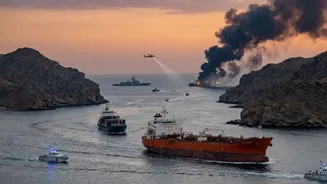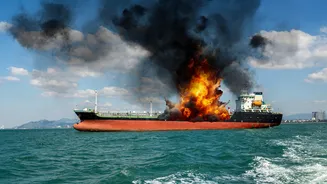







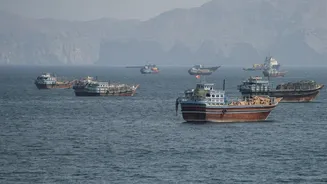

Ships navigating the Strait of Hormuz have faced the heaviest wave of attacks since the US-Israel war against Iran began on February 28, with at least
24 vessels reportedly struck over a two-week period as oil shipments through the strategic waterway fall sharply. The UK Maritime Trade Operations (UKMTO) agency said a tanker had been hit by an unknown projectile in the Strait of Hormuz. Authorities are investigating the incident, although the agency did not immediately provide further details. The latest incident comes amid a renewed surge in attacks on commercial shipping, with at least six vessels reportedly struck on Sunday alone, according to a report by the New York Post, citing UKMTO data. The ships submitted reports after being hit by unidentified projectiles while attempting to leave the strait. At least 18 vessels were struck between October 1 and October 11, while another six attacks were recorded by other European security sources, the Financial Times reported. The attacks have intensified as diplomatic efforts to end the conflict remain deadlocked and Washington and Tehran continue to contest control of the vital maritime corridor. Oil Flows Through Hormuz Fall Sharply The renewed strikes have disrupted oil shipments through the Strait of Hormuz, one of the world's most important energy transit routes. According to maritime analytics firm Kpler, oil flows through the strait reached an average of 15.5 million barrels per day last month, approaching pre-war levels of between 17 million and 20 million barrels per day. However, only 2.9 million barrels of oil transited the waterway on Sunday. The seven-day average flow had fallen to 43 per cent below pre-war levels, the report said. The disruption has contributed to volatility in global energy markets, with Brent crude trading above $105 per barrel. In the United States, the average price of petrol remained above $4.31 per gallon over the preceding month, while diesel prices reached $6.27 per gallon on Tuesday, according to the American Automobile Association. Iran Warns Ships Against Turning Off Transponders Some attacks are reported only after delays because vessels reportedly switch off their transponders to pass through the strait without being detected. Iran's Islamic Revolutionary Guard Corps has warned that ships disabling their tracking systems could be targeted over alleged illegal oil smuggling. The Washington-based Institute for the Study of War has also warned that Iran could be improving its ability to strike vessels. “Iran may be developing its anti-ship missile capabilities to improve its ability to target vessels,” the think tank said in its latest analysis. At least a dozen ships were attacked during the week ending October 5, marking the highest weekly total since the war began. One vessel was reportedly struck off the northern coast of Qatar, highlighting that the threat to commercial shipping extends beyond the immediate Strait of Hormuz passage. The escalating attacks have raised concerns over further disruptions to global oil supplies as efforts to restore maritime security remain uncertain.