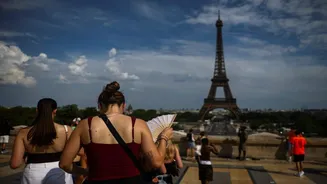





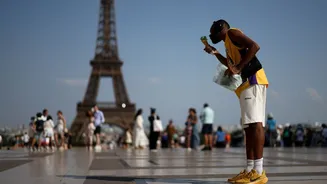



A severe and record-breaking heatwave sweeping across Europe has disrupted schooling for tens of thousands of students, forcing schools to shut, shorten
class hours, or adopt emergency measures to protect children and staff from dangerously high temperatures. According to a Reuters report, around 1,000 schools across England and Wales have either closed temporarily or reduced the length of the school day, while attendance has fallen at many institutions as parents choose to keep children at home. In France, Education Minister Edouard Geffray said nearly 13,500 schools were either closed or operating on special schedules due to the extreme heat. The latest disruptions come as Europe experiences one of its most intense heatwaves, raising fresh concerns over whether schools across the continent are adequately prepared for increasingly frequent and severe climate events.
Schools Struggle to Cope With Extreme Heat
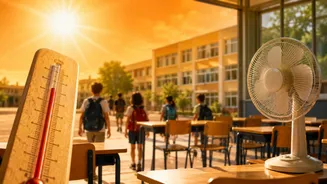
Most schools across Europe are not equipped with air conditioning, leaving classrooms unbearably hot as outdoor temperatures soar. The Reuters report noted that members of Britain's National Association of Schoolmasters Union of Women Teachers (NASUWT) reported several teachers collapsing in classrooms where temperatures touched nearly 40 degrees Celsius.
"Schools are simply not equipped to deal with these kinds of temperatures," Wayne Bates, NASUWT's national lead for health and safety, said, quotes Reuters.
Teachers in France have also been improvising to make classrooms more bearable. According to Reuters, some have taped emergency blankets over windows to block sunlight, forced jammed windows open using screwdrivers, and brought personal fans and misting sprays to school.
Research has consistently shown that excessive classroom temperatures affect students' ability to learn. A 2019 study published in the journal Building and Environment found that reducing classroom temperatures from 30°C to 20°C improved academic performance by approximately 20%.
Southern European countries such as Spain, Greece and Italy have traditionally adapted school calendars to avoid peak summer temperatures, with many schools operating half-days during June and beginning summer holidays by mid-June. However, experts warn that extending holidays can also deepen social inequalities, particularly for families unable to afford childcare or keep children safe during extreme heat.
Climate Adaptation Becomes a Priority
As heatwaves arrive earlier in the year, education authorities are increasingly investing in long-term climate adaptation measures instead of relying solely on temporary closures.
In Spain, thermal cameras installed by Greenpeace recorded surface temperatures of up to 35°C inside classrooms in Madrid and as high as 60°C in schoolyards in Seville. Barcelona has earmarked €100 million from its tourist tax revenue to install air conditioning in around 170 schools and educational centres by 2030.
France has launched 6,200 projects under an €800 million climate adaptation programme aimed at making schools more resilient to extreme weather. Proposed measures include increasing green cover in schoolyards, installing window filters that can reduce indoor temperatures by around 4°C, and shifting examinations to morning hours during heatwaves.
However, education unions argue that air conditioning alone cannot solve the problem and that schools need broader climate-resilient infrastructure.
With France recording its hottest day on record this week, some school leaders say closures remain the safest option during extreme weather. Thierry Pajot, president of the School Principals' Union, told FranceInfo that he did not want to see any student or staff member lose their life because of the heatwave.
Meanwhile, the Director-General of the World Health Organization, Tedros Adhanom Ghebreyesus, warned that Europe's rising temperatures are putting both education and public health at risk. In a LinkedIn post, he said Europe is warming at roughly twice the global average rate, making extreme heat more frequent and severe. He urged governments to invest in climate-resilient health systems while accelerating climate action to address the underlying drivers of the climate crisis. He also shared public health guidance advising people to take precautions to stay safe during periods of extreme heat.
The widespread disruption to schools highlights how climate change is increasingly affecting education systems, prompting governments across Europe to rethink school infrastructure, academic calendars and emergency preparedness for a hotter future.
(Inputs from Reuters)