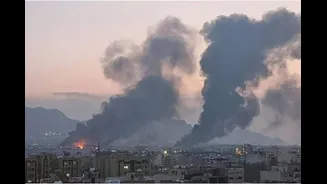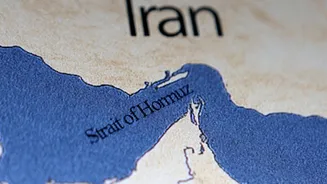







As the Middle East conflict enters its third week, disruptions around the Strait of Hormuz are beginning to redraw global oil routes, with the Red Sea
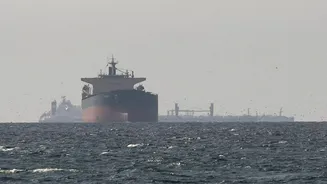
emerging as a crucial, but increasingly vulnerable, alternative. According to CNN, Iran’s disruption of traffic through Hormuz has pushed producers to search for other ways to move crude, even as fresh threats now raise doubts over the safety of the Red Sea corridor as well. Saudi Aramco has already started redirecting millions of barrels of crude through its east-to-west pipeline, sending oil to the Red Sea port of Yanbu instead of routing it via the Persian Gulf, CNN reported. The shift is already showing up in shipping data. Figures from Kpler show that daily oil loadings at Yanbu have more than doubled this month compared with last year’s average. But even this rerouting option is now under pressure. Earlier this week, Iran warned that US-linked facilities in the Red Sea could be targeted, escalating fears over the route’s security. According to Iran’s semi-official Fars news agency, the country’s unified military command said, “The presence of the US aircraft carrier Gerald R. Ford in the Red Sea is considered a threat to Iran.” It added that “logistical and service centres supporting the mentioned naval group in the Red Sea will be regarded as potential targets by Iran’s armed forces.” Shipping Risks In The Red Sea The warning lands in a region that was already unstable well before the latest escalation. As CNN noted, shipping risks in the Red Sea have been elevated since late 2023, when Iran-backed Houthi militants began attacking vessels in response to Israel’s war against Hamas. Those attacks forced many shipping companies to divert around the Cape of Good Hope, raising both transit times and costs. That risk remains high. In an advisory issued on Monday, the United Kingdom Maritime Trade Operations Centre described the threat to commercial shipping in the Red Sea as “substantial,” pointing to the “continued hostile posture of Houthi forces toward commercial shipping.” The agency added that the group retains both the capability and the demonstrated intent to carry out maritime attacks. While Saudi Arabia’s pipeline offers an important fallback, it cannot fully replace Hormuz. CNN reported that the line can carry up to 7 million barrels per day, versus roughly 15 million barrels that normally pass through the strait. Analysts told CNN that if tensions worsen and the Red Sea is also disrupted, oil markets could react sharply, with broader inflationary effects likely to follow.