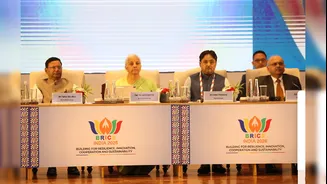







Speaking at the BRICS Tax Heads and Tax Experts Meeting in New Delhi, Finance Minister Nirmala Sitharaman said BRICS economies need sustained institutional
cooperation on international taxation, transfer pricing and revenue statistics. The Finance Minister stated that multilateral tax negotiations, including the UN Framework Convention on International Tax Cooperation, could shape cross-border taxation for a generation. "The rules of international taxation are being renegotiated. There are several multilateral tax negotiations including the UN Framework Convention on International Tax Cooperation under active negotiation. The decisions made in these processes over the next few years will shape cross-border taxation for a generation. BRICS economies — as source jurisdictions, as large developing economies, as countries that have built significant domestic tax capacity from a low base — have a perspective on those negotiations that is essential to their fairness and their durability," she said. She also highlighted the role of technology, tax administration and people in driving greater collaboration among BRICS tax authorities and strengthening the effectiveness of tax systems. "Look at what has emerged from the BRICS tax track this year, and you find three things recurring across everything that has been built. Technology — the use of data and digital infrastructure to make tax administration more precise, more accessible, and less dependent on the discretionary power of individuals. Administration — the governance structures, the shared standards, the practical tools that give a cooperation like ours a durable institutional shape. And People — the investment in the men, women and the young of our institutions, and in the relationships between the individuals who carry them forward," she stated. The Finance Minister also highlighted the evolving role of women in the BRICS tax network, saying it had moved 'from aspiration to institution'. "The women in tax network has this year moved from aspiration to institution — four active sub-groups, sustained programming, and a community of women tax professionals across BRICS who recognise each other as peers and invest in each other’s growth and are also ready to engage with women outside the tax administration. That, too, is institution-building of the most durable kind," she noted.