






Israel's most serious security challenge may not necessarily be coming from beyond its borders. A reported classified assessment by the CIA's Red Cell
has warned that mounting political, economic and social fractures inside Israel could eventually push the country towards civil conflict or state collapse, according to Drop Site News. The assessment, reportedly prepared in August under the title “Fracture From Within”, was described to the publication by two US sources familiar with its contents. The CIA has not publicly released the document or confirmed the assessment. Rather than forecasting an inevitable civil war, the reported analysis examines how several existing fault lines could converge and create a much more dangerous internal crisis.
Draft dispute emerges as a major fault line
One of the central concerns reportedly identified by the assessment is Israel's long-running dispute over military service exemptions for ultra-Orthodox Jews. The issue has become increasingly contentious after prolonged military mobilisation placed additional pressure on Israel's armed forces. Large numbers of reservists have spent extended periods serving during Israel's wars, while ultra-Orthodox men have historically received exemptions to pursue religious studies.
That disparity has generated growing resentment among sections of Israeli society and has also exposed divisions within Prime Minister Benjamin Netanyahu's political coalition. The issue has become particularly sensitive as Israel faces continuing demands on its military manpower. The reported CIA assessment also points to the presence of heavily armed veterans returning from prolonged combat, adding another potential source of instability if social and political tensions escalate.
War, economy and settler violence add pressure
The reported assessment also identifies economic pressure and rising military expenditure as contributing factors. Years of fighting have placed a significant burden on Israel's economy and society, while repeated mobilisation has disrupted the lives of reservists and their families.
Another issue highlighted in reporting on the assessment is settler violence in the occupied West Bank. The Israel Democracy Institute has separately documented concerns over rising political and societal tensions, while Israel's Institute for National Security Studies recently warned about increasing Jewish nationalist violence and attacks involving security personnel.
The reported CIA assessment also links the internal strain to Netanyahu's political struggle and the wider constitutional conflict surrounding his government.
Netanyahu election adds political uncertainty
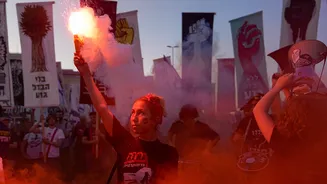
The timing of the assessment is significant. Israel is due to hold parliamentary elections on October 27, with Netanyahu fighting for his political future amid deep divisions within the country. Recent reporting has highlighted falling public trust, disputes over ultra-Orthodox conscription and tensions between different sections of Israeli society.
The election therefore arrives against a backdrop in which political disagreements increasingly intersect with questions of military service, national security and the direction of the state. The reported CIA assessment also warns that Israel's growing international isolation could compound domestic pressures. According to the report as described by Drop Site News, weakening external support and changing regional dynamics could further intensify the country's internal vulnerabilities.
But the distinction between warning and prediction is crucial. The reported assessment does not establish that Israel is heading inevitably towards civil war or state collapse. It identifies a combination of pressures that intelligence analysts believe could produce such an outcome if they continue to worsen.
For now, the document itself remains classified, and its contents are based on descriptions provided by sources rather than a publicly available CIA assessment. The broader question raised by the report is therefore less whether Israel is already approaching civil war, and more whether its political, military and social institutions can absorb the pressures created by years of conflict without those existing fractures becoming something far more dangerous.