




What is the story about?
The United States and Israel initiated military strikes against Iran on Saturday, targeting locations including the offices of Supreme Leader Ayatollah
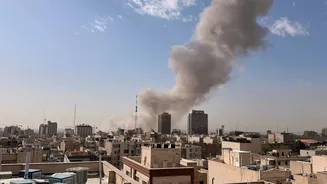
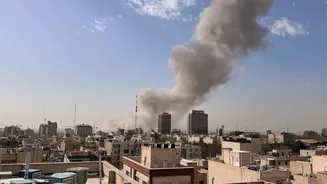
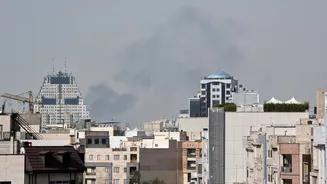
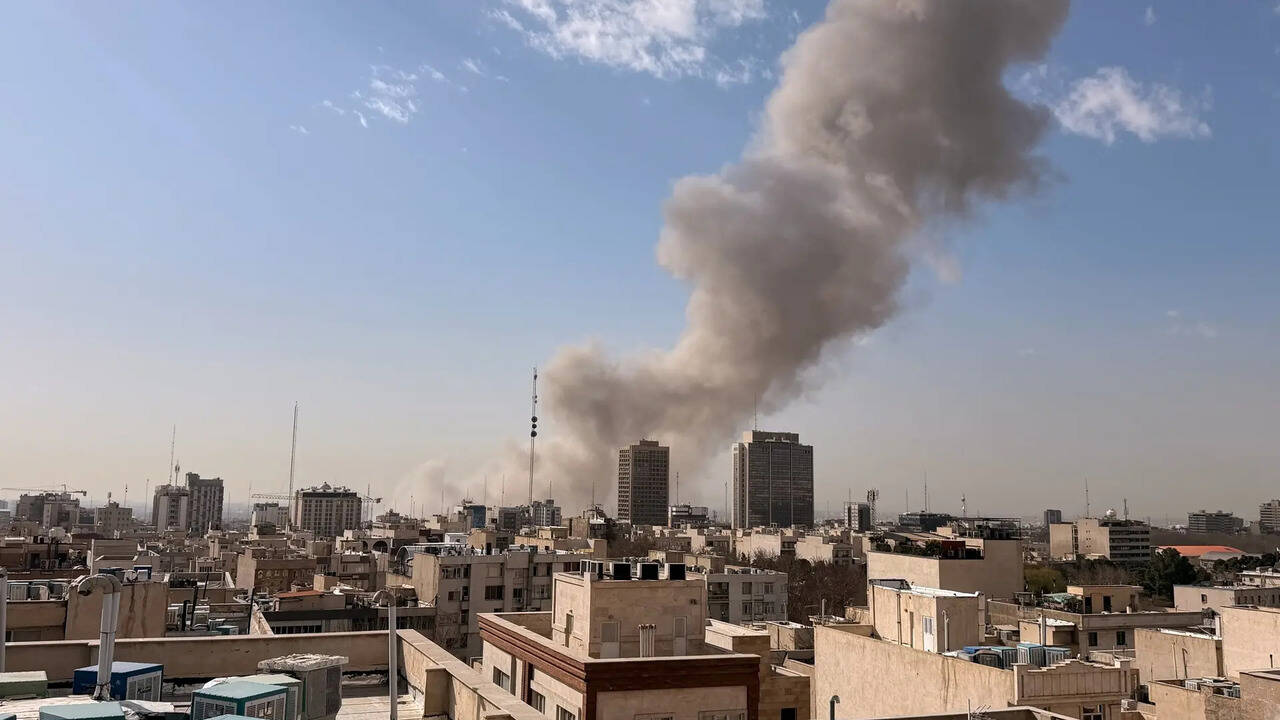
Ali Khamenei. Reports from Iranian media indicated widespread attacks across the country, with smoke visible in Tehran. President Donald Trump announced in a social media video that the U.S. had commenced 'major combat operations in Iran,' citing ongoing developments in Iran's nuclear program and missile capabilities aimed at the United States.
US and Israeli Strikes Target Multiple Locations
The strikes on Saturday were reported to focus on a range of cities and military sites across Iran. Tehran experienced direct hits, resulting in smoke plumes rising over the skyline, while explosions were also documented in major cities such as Isfahan, Shiraz, and Tabriz.Additionally, blasts were reported in several western towns and around vital Persian Gulf port cities, including Asaluyeh, which are crucial for Iran’s oil trade.
France Issues Caution to Citizens
In response to the escalating conflict, France has advised its citizens in the region to exercise extreme caution. Junior Defense Minister Alice Rufo stated on France-2 television that 'A military escalation is underway ... It’s not the time for negotiations. We are in a situation of war.'She emphasized the priority of protecting French citizens and military personnel in the area, while French military spokesperson Col. Guillaume Vernet confirmed that the armed forces are adapting their strategies to ensure the safety of their installations.
Israeli President Supports Military Action
Israeli President Isaac Herzog expressed support for the coordinated U.S.-Israeli operation against Iran, stating that he hopes it will lead to significant changes for the Middle East and the world.Khamenei's Status Remains Uncertain
Supreme Leader Ayatollah Ali Khamenei has not made any public appearances before or after the attacks, raising concerns about his whereabouts. During previous conflicts, he was believed to have been relocated to secure locations.Qatar Reports Successful Defense Against Iranian Attacks
Qatar's Defense Ministry announced that it successfully repelled a second wave of Iranian attacks targeting various parts of the nation, condemning the strikes as a 'flagrant violation' of its sovereignty.The Qatari Foreign Ministry emphasized its long-standing call for dialogue with Iran, asserting that such aggression cannot be justified.
Regional Airspace Closures and Flight Disruptions
Syria's civil aviation authority declared the closure of airspace in southern Syria, prompting several airlines, including Lufthansa and Air France, to cancel flights to Lebanon.Emirates Airlines reported disruptions to several flights due to the airspace closure in the UAE, urging passengers to verify their flight statuses online.
Continued US-Israeli Military Operations Anticipated
A source familiar with military plans indicated that the U.S. and Israel had coordinated these operations for months, with expectations that the attacks would persist for several days.Iran Reports Civilian Casualties from Strikes
Iranian officials stated that Israeli-U.S. airstrikes resulted in the deaths of five students at a girls' school in Minab, marking the first confirmed civilian casualties from the ongoing military operations.Israeli Casualties and Iranian Retaliation
Israel's national rescue service reported one man lightly wounded due to an impact in northern Israel. Iranian forces claimed responsibility for retaliatory strikes against U.S. military facilities in the region.International Reactions to Escalating Conflict
The European Union's foreign policy chief labeled the situation as perilous, underscoring Iran's actions as a threat to global security. Meanwhile, Turkey's airline announced suspensions of flights to several Middle Eastern countries amid the rising tensions.Military and Strategic Implications
The U.S. Navy's 5th Fleet, which operates in Bahrain, plays a crucial role in securing shipping lanes in the oil-rich Middle East. Iranian threats to close the Strait of Hormuz could significantly impact global oil supply.Recent drone strikes in Iraq targeted an Iran-linked militia, further complicating the regional dynamics as Iranian officials confirm plans for continued military responses to the U.S.-Israeli actions.