





Iran's announcement that it plans to introduce "service fees" for ships transiting the strategically crucial Strait of Hormuz has sparked fresh questions
over whether Indian vessels will also have to pay the proposed charges. Speaking at the World Peace Forum in Beijing on Saturday, Iran's Ambassador to China, Abdolreza Rahmani Fazli, said Tehran would begin charging vessels using the waterway, but insisted the move should not be seen as a "toll." "As a country where the Hormuz is part of its territorial waters, we will definitely charge service fees," Fazli said. However, he also suggested that friendly nations, including those that supported Iran during difficult times, could receive preferential treatment. "We will definitely consider special treatment for the countries that were friendly to us and specially stood by us during the hard times," he added.
Will India Have To Pay?
While Iran has now signalled plans to levy service charges, its previous statements indicate that India may not be among the countries immediately affected. In April, Iran's Ambassador to India, Mohammad Fathali, had clarified that Indian ships were not being charged any toll despite heightened tensions in the region.
"You can ask the Indian government if we have charged anything up to now," Fathali had said.
He had further underlined the close relationship between New Delhi and Tehran.
"In this difficult time, we have good relations. We believe Iran and India share common interests and a common fate. Iran shares strong and trustworthy relations with the Indian government. In difficult times, India has proven itself to be a sensitive and reliable partner, and the cultural ties between the two nations remain deep-rooted," he had noted.
Although Tehran has not explicitly confirmed whether India will be exempt from the proposed service fees, the ambassador's remarks and Fazli's reference to "special treatment" for friendly countries suggest New Delhi could receive preferential consideration.
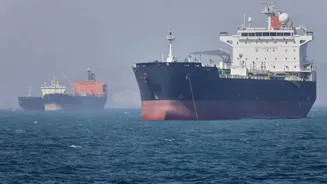
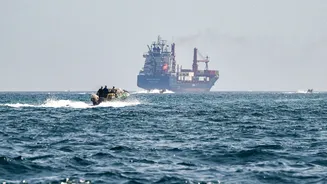
The Strait of Hormuz remains one of the world's most critical maritime chokepoints, handling a significant share of global crude oil and liquefied natural gas (LNG) shipments. Iran has tightened its control over the Strait of Hormuz since February 28, when it barred the safe passage of vessels belonging to or affiliated with Israel and the United States following their joint strikes on Iranian territory.
India had already taken precautionary steps during the recent regional conflict. In March, the government invoked emergency measures to divert gas supplies from non-priority sectors to essential users after LNG shipments through the Strait of Hormuz were disrupted.
However, with supplies from the Middle East resuming, the Ministry of Petroleum and Natural Gas on Saturday withdrew those emergency restrictions on gas suppliers.