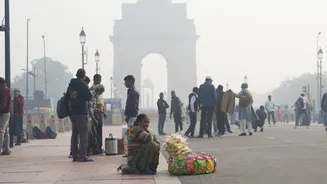









Residents of Delhi and the National Capital Region woke up to another difficult winter morning on Tuesday (January 20), as dense fog and toxic air pollution
severely affected daily life. Low visibility, cold temperatures and hazardous air quality combined to create challenging conditions for commuters, schoolchildren and senior citizens. According to the India Meteorological Department (IMD), shallow to moderate fog is likely during the morning hours across Delhi, Gurugram, Faridabad and Ghaziabad. Visibility on roads may remain poor, especially during early hours, increasing the risk for motorists. The minimum temperature is expected to hover between 7 and 9 degrees Celsius, while the maximum temperature may reach 23 to 25 degrees Celsius.
Why Air Pollution Is a Bigger Concern Today
While fog is seasonal, air quality has reached alarming levels. Several areas in Delhi recorded an Air Quality Index above 450, placing them in the “severe plus” category. Localities such as Wazirpur, Rohini, Mundka, Ashok Vihar, Anand Vihar and Jahangirpuri are among the worst affected.
Check AQI in Your Area
#WATCH | A layer of smog covers parts of Delhi NCR. Visuals from the area near the Swaminarayan Akshardham temple in Pandav Nagar.
AQI in the area, as claimed by CPCB, is 445, falling in the 'severe' category. pic.twitter.com/W3CPVTZPaX— ANI (@ANI) January 20, 2026
Due to the deteriorating air quality, authorities have enforced GRAP-4 restrictions across Delhi-NCR. These include strict curbs on construction activities, diesel vehicles and non-essential industrial operations. Residents, especially those with respiratory issues, are advised to stay indoors and avoid outdoor physical activity.
Rain in the Coming Days?
IMD forecasts no major change in minimum temperatures over the next three days. However, a slight rise of 2 to 3 degrees Celsius is expected around January 23, along with light rain or drizzle and surface winds blowing at 20 to 30 kmph. This may provide temporary relief from pollution, though cloudy skies are likely to persist.
What You Can Do
Use masks while stepping out, avoid peak traffic hours, follow GRAP guidelines, and check daily AQI updates before planning outdoor activities.