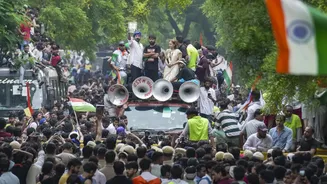





Learning from recent large-scale protests led by the Cockroach Janta Party (CJP) in Delhi, the Mumbai Police has adopted a proactive strategy to prevent
any law-and-order issues. According to police sources, authorities had already started preparations nearly 14 days before the protest, focusing on intelligence gathering and digital surveillance. A special digital patrol team monitored social media platforms round the clock, tracking posts related to the CJP movement, Times Now has learnt. Police kept a close watch on hashtags, keywords, viral posts, and accounts repeatedly promoting the protest, identifying key online influencers and organisers. Officials said most online activity came from young supporters, political groups, and public personalities backing the protest.
Three-Layer Police Strategy
1. Digital Surveillance & Intelligence Collection
Two weeks before the protest, police closely monitored social media trends, online organisers and intelligence inputs to assess mobilisation plans.
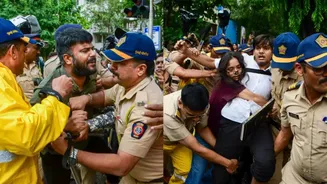
2. Preventive Detention at Dadar Station
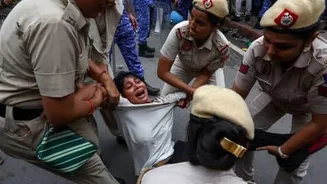
Police identified key members of different protest groups and detained 2-3 leading individuals as soon as they reached Dadar railway station. Officials believe this prevented larger groups from assembling and reduced crowd mobilisation.
3. Ground-Level Crowd Control
Those attempting to enter prohibited areas were immediately detained. Protesters were then transported in public vehicles to different police stations across Mumbai to avoid crowd build-up at one location.
Protests Held at 98 Locations Across Maharashtra
Apart from Mumbai’s Shivaji Park, demonstrations were also reported from Kolhapur (Shivaji Chowk), Pune, Gadchiroli and several other districts. In total, 98 protest locations were identified across Maharashtra.
Police officials said the combination of advance intelligence, digital monitoring and preventive detention helped maintain law and order throughout the state.
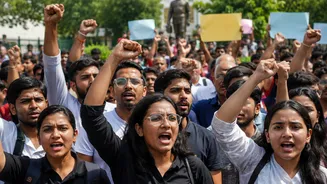
The agitation continued on Tuesday, with hundreds of students and supporters returning to Jantar Mantar and persisting with their original demand of an apology from Union Minister Dharmendra Pradhan over the NEET fiasco.