







What is the story about?
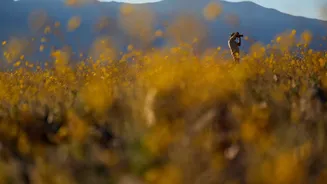
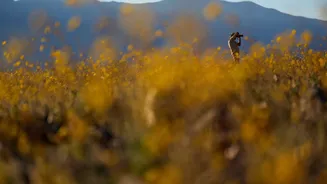
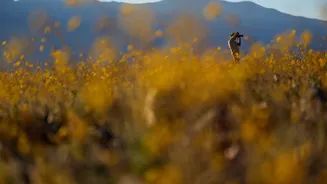
DEATH VALLEY, Calif. (AP) — Death Valley, recognized as the driest location in North America, is currently witnessing a rare superbloom of wildflowers,
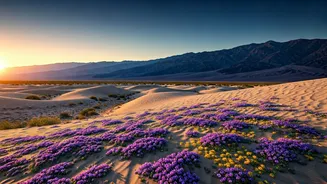
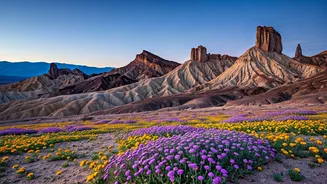
transforming its typically barren landscape into vibrant carpets of color. This phenomenon occurs once a decade, and the blooming flowers are a result of significant rainfall and warm temperatures over the past six months, marking the most impressive bloom since 2016.
Unprecedented Weather Conditions
Death Valley has received nearly a year’s worth of rain since October, with the National Park Service reporting a record 1.76 inches of rain in November. This precipitation has allowed dormant seeds in the soil to germinate and flourish.A Variety of Wildflowers
Among the wildflowers blooming are the desert gold flower, purple phacelia, brown-eyed primrose, and pink desert five-spot, creating a stunning contrast against the desert backdrop.Las Vegas resident Jackie Gilbert, who visited the area, expressed her admiration for the resilience of the flowers, stating, “It’s a good reminder that even in the face of all this adversity, that they can still thrive.”
Ecological Insights
Ecologists emphasize that this superbloom challenges the common misconception that deserts lack life. Loralee Larios, a plant ecologist at the University of California, Riverside, noted that both plants and animals in Death Valley have adapted remarkable strategies for survival.Tiffany Pereira, an ecologist at the Desert Research Institute, explained that desert plants can endure extended periods without water, waiting for optimal conditions to germinate.
Limited Viewing Opportunity
The wildflower display is expected to last only until mid-to-late March at lower elevations, while higher areas will bloom from April through June, according to the National Park Service.Visitors are encouraged to check the visitor center for optimal viewing locations, with popular sites identified along Badwater Road and near Ashford Mill.
Park rangers advise guests to stay on designated paths to protect the flowers and to avoid picking them, as this can impact future blooms. Visitors should also be cautious of sphinx moth caterpillars, which are searching for food among the flowers.
Matthew Lamar, a park ranger, remarked, “I think it’s a great time to come to Death Valley and have that unique experience because who knows when the next one will happen?”