






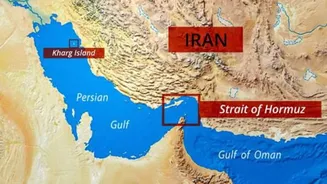
The West Asia crisis, due to the United States (US) and Israel joint attack on Iran, leading to blockage of Strait of Hormuz, and spike in the crude oil
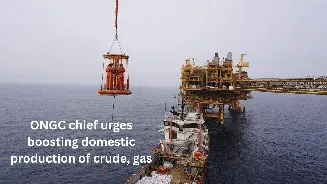
prices to hit government's budgeted Rs 75,000 crore dividend from central public sector enterprises (CPSEs) and other investments in this financial year. High oil prices could hurt state-run petroleum firms, which alone accounted for a third of the government's dividend collection of Rs 78,438 crore from all CPSEs and other relevant entities last fiscal, as reported by the Economic Times. Notably, the dividend collection exceeded the budget estimates for a fifth straight year last fiscal. The petroleum firms together accounted for the biggest contributors to the government's dividend kitty last fiscal. It contributed a payout of Rs 25,798 crore, followed by entities in sectors such as power at Rs 13,213 crore and coal at Rs 10,876 crore. As per the Department of Investment and Public Asset Management (DIPAM) data, last fiscal, the government's combined disinvestment and asset monetisation receipts touched Rs 45,306 crore, surpassing the revised target of Rs 33,847 crore but slightly short of the budget estimate of Rs 47,000 crore. The price of United States Crude oil rose 8% to $104.24 a barrel, and Brent crude oil rose 7% to $102.29 after the US said that it would blockade Iranian ports beginning Monday. According to the Asian Development Bank, Asia's economic growth is likely slow even if oil prices stabilise in the coming months, as the impact of war in West Asia ripples through industries from manufacturing to tourism. In its Asian Development Outlook report, ADB said Asia's gross domestic product (GDP) expansion is seen moderating to 5.1% this year from 5.4% in 2025. The report’s projections were finalised more than a week into the Iran war, which started 28 February, and assume a scenario where oil prices will gradually normalise and move towards pre-war levels by year-end. The situation remains volatile, with oil prices whipsawing on daily developments in the conflict.