





Israel carried out what it described as its largest coordinated strike of the current war on Wednesday, hitting more than 100 Hezbollah targets within
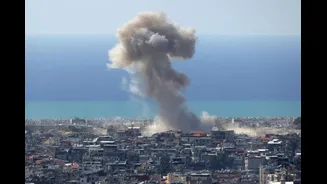
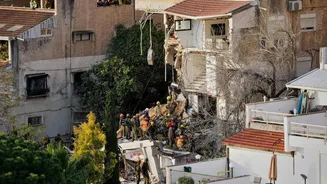
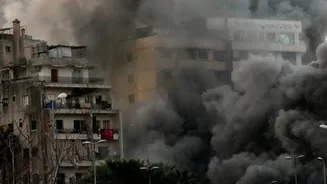
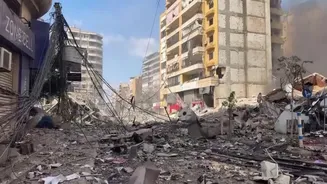
10 minutes across Beirut, southern Lebanon and the eastern Bekaa Valley. The strikes included attacks on dense commercial and residential areas in central Beirut, launched without warning hours after a ceasefire was announced in the US-Israeli war with Iran, reported AP. Black smoke rose over parts of the Lebanese capital as explosions rocked across city. Ambulances rushed to burning sites and emergency responders searched damaged buildings and charred vehicles. At least one apartment building was hit. It was not immediately clear how many people were killed or wounded. Israeli Prime Minister Benjamin Netanyahu said overnight that the ceasefire suspending the six-week-old US-Israeli war against Iran did not apply to Lebanon, and the Israeli military said operations against Hezbollah there would continue. "The battle in Lebanon continues, and the ceasefire does not include Lebanon," Israel's military spokesperson Avichay Adraee said in a statement, as quoted by Reuters.
The Israeli military said it targeted missile launchers, command centres and intelligence infrastructure, accusing Hezbollah of operating from civilian areas.
"The State of Lebanon and its civilians must refuse Hezbollah's entrenchment in civilian areas and its weapons build-up capabilities," the military said in a statement.
Israel has rarely struck central Beirut since the latest conflict with Hezbollah began on March 2, though it has frequently targeted southern and eastern Lebanon and Beirut’s southern suburbs.
A Hezbollah official told The Associated Press before the strikes that the group was allowing time for mediation but had not committed to any ceasefire.
Earlier Wednesday, some displaced families in Beirut and Sidon began preparing to return home after news of the Iran ceasefire. But that changed after Israeli Prime Minister Benjamin Netanyahu said military operations in Lebanon would continue.
"We can't take this anymore, sleeping in a tent, not showering, the uncertainty," said Fadi Zaydan, 35."But we'll be targeted if we go home," he said, adding that his family decided to wait in Sidon for now, reports AP.