







What is the story about?
TEHRAN, Iran (AP) — U.S. President Donald Trump broadened his threats against Iran on Monday to encompass all power plants and bridges, as the deadline
for a potential deal approached following Tehran's rejection of a 45-day ceasefire proposal. Iran has insisted on a permanent resolution to the ongoing conflict. Trump emphasized the urgency of the situation, stating that his ultimatum, set for Tuesday at 8 p.m. EDT, was non-negotiable. He claimed that he had already provided Iran with sufficient extensions to reach an agreement.
U.S. Demands and Consequences
The United States has demanded that Iran allow unrestricted shipping traffic through the vital Strait of Hormuz or face the destruction of its power plants and bridges. This warning has raised concerns regarding potential violations of international law.In a related escalation, Israel targeted a significant petrochemical facility and reportedly eliminated the intelligence chief of Iran's paramilitary Revolutionary Guard.
Iran's Response and Diplomatic Efforts
In response to the escalating tensions, Iran presented a ten-point plan to cease hostilities through negotiations mediated by Pakistan, as reported by the state-run IRNA news agency. Iran's diplomatic representative in Cairo, Mojtaba Ferdousi Pour, expressed skepticism towards the Trump administration, citing past bombings as a breach of trust.A regional official involved in the negotiations indicated that discussions were ongoing, stating, “We are still talking to both sides,” while Trump also confirmed that negotiations were still in progress.
Military Actions and Civilian Impact
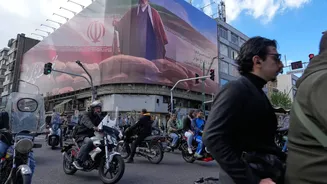
Activists reported a new series of strikes on Tehran early Tuesday, which Israel claimed responsibility for, though details regarding the targets were not disclosed. Concurrently, Japan announced the release of a national detained in Iran since January, with officials confirming that he was in good health.Trump's Ultimatum and International Reactions
Trump reiterated his threats, stating, “Every bridge in Iran will be decimated by 12 o’clock tomorrow night,” asserting that all power plants would be rendered inoperable. When questioned about potential accusations of war crimes, he dismissed the concern, suggesting that Iranian citizens might welcome such actions as a means to change their leadership.Despite Trump's assertions, there have been no indications of an uprising within Iran, as citizens endure the ongoing bombardment.
International bodies have voiced strong objections to attacks on civilian infrastructure, with a United Nations spokesperson categorizing such actions as clear violations of international law.
Continued Strikes and Casualties
Reports indicate that airstrikes have resulted in at least 29 fatalities across Iran. In Lebanon, Israeli operations have targeted locations associated with the Iran-linked Hezbollah militia, resulting in civilian casualties.Since the conflict's onset, over 1,900 individuals have died in Iran, while more than 1,400 fatalities have been reported in Lebanon, alongside significant displacement of civilians in both regions.