






The United States is weighing whether to expand its nuclear-sharing arrangements deeper into Eastern Europe, a move that could significantly reshape NATO's
deterrence posture against Russia. According to a report by the Financial Times, Washington is discussing the possibility of deploying nuclear-capable assets to additional NATO countries beyond the six alliance members that currently host infrastructure linked to America's nuclear deterrent. While officials caution that no agreement is close, the discussions underscore how dramatically Europe's security environment has changed since the outbreak of the Ukraine war. At the centre of the debate are so-called dual-capable aircraft (DCA) — military aircraft that can carry both conventional and nuclear weapons. Several NATO countries on the alliance's eastern flank, including Poland and some Baltic states, are reportedly interested in hosting bases capable of supporting these aircraft. The move would not necessarily involve the immediate deployment of nuclear warheads. However, it would bring key elements of NATO's nuclear infrastructure closer to Russia's borders, sending a powerful strategic message about the alliance's commitment to collective defence.
Why NATO's Eastern Members Want A Bigger Nuclear Role
For countries such as Poland, Lithuania, Latvia and Estonia, the war in Ukraine has reinforced longstanding concerns about regional security. These nations sit closest to Russia and Belarus and have repeatedly argued that NATO must strengthen its military footprint in Eastern Europe to deter potential aggression. Hosting dual-capable aircraft would place them more directly within NATO's nuclear-sharing framework, which has traditionally been centred in Western Europe.
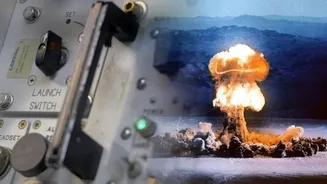
Currently, NATO's nuclear-sharing arrangements involve a limited number of member states that host infrastructure and aircraft capable of supporting US nuclear weapons in the event of a major conflict. Expanding that network eastward would represent one of the most significant shifts in NATO's nuclear posture since the end of the Cold War.
The discussions also reflect growing uncertainty about Europe's future security architecture as Russia continues military operations in Ukraine and NATO members increase defence spending across the continent.
Nuclear Deterrence Returns To The Centre Of European Security
The debate comes as the Trump administration continues pressing European allies to shoulder a greater share of conventional defence responsibilities. Elbridge Colby, a senior Pentagon policy official, has publicly argued that while Europe should take the lead in building conventional military power, the United States will continue providing the nuclear umbrella that underpins NATO's deterrence strategy.
For decades, America's nuclear arsenal has served as the alliance's ultimate security guarantee. However, the return of major-power competition and fears of escalation in Europe have revived discussions that many believed belonged to the Cold War era.
Any expansion of nuclear-capable infrastructure would likely provoke a strong reaction from Moscow, which has repeatedly criticised NATO's military build-up along its borders. Russia has previously cited the alliance's eastward expansion as a key security concern and has responded by strengthening its own missile and nuclear deployments in the region.
For now, officials stress that discussions remain preliminary. Yet the fact that NATO is even debating the possibility highlights a broader reality: Europe is entering a new era of security competition, one in which nuclear deterrence is once again becoming a central part of strategic planning.