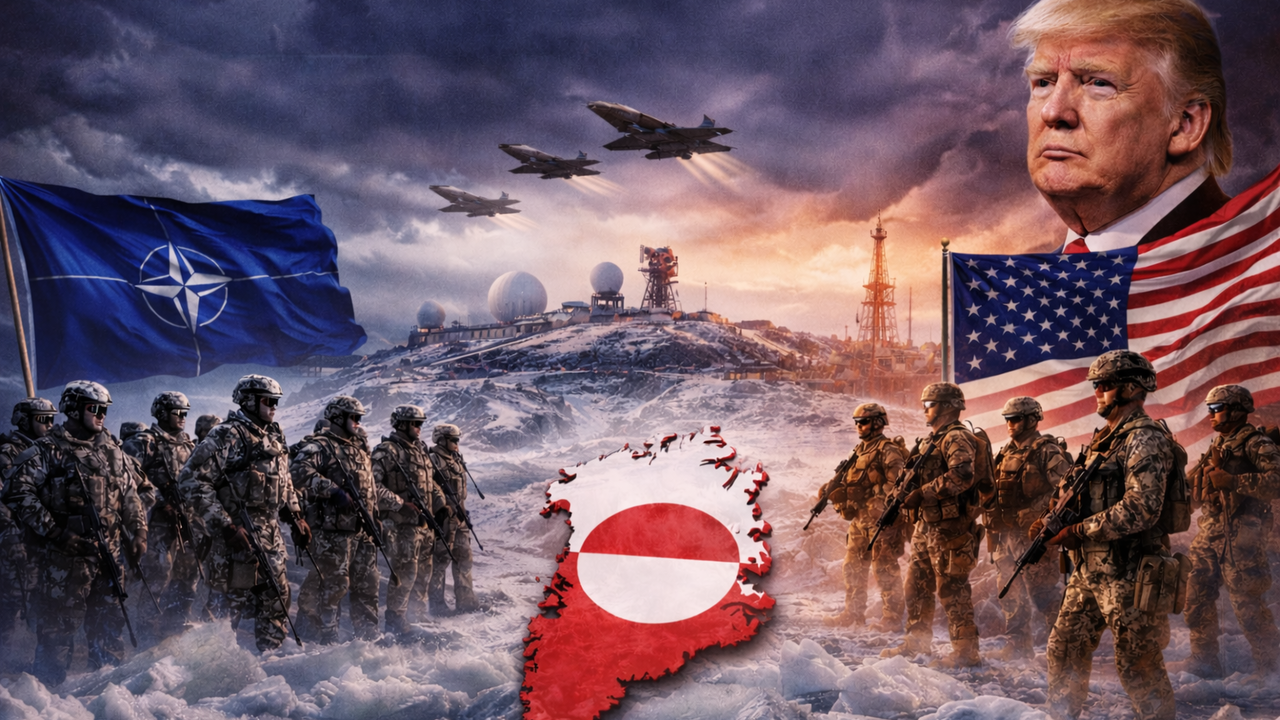









In the frozen expanses of the Arctic, a geopolitical storm is brewing that pits the United States against its own allies in NATO. As of January 12, 2026,
President Donald Trump’s renewed threats to annex Greenland, a Danish autonomous territory, have escalated tensions to unprecedented levels within the transatlantic alliance. What began as offhand remarks during Trump’s first term has evolved into explicit warnings that the US will “take Greenland one way or the other” to counter perceived threats from Russia and China. This aggressive stance has prompted urgent defense responses from European NATO members, raising the specter of intra-alliance conflict. But will it lead to war? This article examines the crisis, the risks involved, and the latest defense responses from European NATO countries. Greenland’s Strategic Allure and US Ambitions Greenland, the world’s largest island, holds immense strategic value due to its Arctic location, vast mineral resources—including rare earth elements critical for modern technology—and emerging shipping routes as ice caps melt. The United States already maintains a major military presence at Thule Air Base, a key radar installation for missile defense. Trump’s rhetoric frames annexation as essential to prevent Russian or Chinese encroachment, arguing that failure to act would allow rivals to gain a strategic foothold. Denmark and Greenland’s leaders have firmly rejected any sale or takeover, stressing sovereignty and warning that US aggression could fundamentally damage NATO. European allies view the threats as a betrayal, particularly given NATO’s Article 5 clause, which treats an attack on one member as an attack on all. A US move against Greenland would technically trigger Article 5 against America itself, creating an unprecedented paradox within the alliance. Polls indicate overwhelming opposition among US citizens to military action, while experts caution that such a move could severely erode Washington’s global credibility. The Risk of War: Unlikely, but Not Impossible Most analysts dismiss the likelihood of outright war between the US and European NATO members. NATO’s deep military and economic interdependence—especially Europe’s reliance on US power to deter Russian aggression—makes armed conflict a lose-lose outcome. US Senator Chris Murphy has warned that annexing Greenland “would be the end of NATO,” suggesting alliance collapse rather than battlefield confrontation. Still, escalation risks exist. A unilateral US military deployment could provoke defensive responses, potentially leading to standoffs or accidental clashes. European leaders are prioritizing diplomacy, including proposals for joint NATO missions to collectively enhance Arctic security and address US concerns. For now, the crisis remains largely rhetorical, but it underscores NATO’s fragility amid renewed “America First” policies. Defense Updates: European NATO Countries’ Responses European NATO members have stepped up preparations focused on Arctic readiness, alliance unity, and deterrence. Responses vary by country but share a common goal: defending Danish sovereignty while avoiding direct confrontation. Denmark: Frontline Defender and Diplomatic Anchor As Greenland’s administering power, Denmark is at the center of the crisis. Prime Minister Mette Frederiksen has condemned US threats, stating there is “no room for threats, pressure, and talk of annexation.” Denmark has accelerated procurement of F-35 fighter jets and P-8 Poseidon surveillance aircraft to strengthen Arctic patrols. It has also requested NATO reinforcements and intensified military drills in Greenland, including special forces exercises focused on threat detection. United Kingdom: Leading Multilateral Efforts The UK is spearheading talks on deploying NATO forces to Greenland as a stabilizing measure. Prime Minister Keir Starmer is weighing troop deployments in coordination with Germany and France. Defense measures include heightened Royal Navy readiness in the Arctic, with the HMS Queen Elizabeth carrier group on alert. British officials have emphasized NATO unity while rejecting the prospect of war with the US Germany: Proposing an “Arctic Sentry” Mission Germany has proposed a joint NATO “Arctic Sentry” mission, modeled on the Baltic Sentry initiative, to monitor infrastructure and enhance surveillance without annexation. Berlin is increasing Bundeswehr deployments to the Arctic and investing in icebreaker capabilities. Defense Minister Johann Wadephul is visiting the US for talks aimed at de-escalation. France: Strong Warnings and Strategic Signaling France has taken one of the most hawkish positions. A draft resolution has been submitted to begin withdrawing from NATO’s integrated command, echoing historic precedent. French military voices have warned that a US attack on Greenland would turn allies into adversaries. France has placed naval assets, including the Charles de Gaulle carrier, on readiness in the North Atlantic. Nordic Countries: Unified Arctic Focus Finland, Sweden, Norway, and Iceland are coordinating closely. Finland and Sweden have expanded joint exercises with Denmark, while Norway is upgrading its Andøya air base for maritime patrol aircraft. Iceland has called for de-escalation but increased coast guard readiness. Baltic States: Solidarity with Denmark Estonia, Latvia, and Lithuania have expressed strong political support for Denmark while prioritizing defenses against Russia. They see US actions as a dangerous distraction from the primary security threat. Eastern and Central Europe: Cautious Alignment Poland has urged restraint while quietly strengthening its own capabilities. Other countries in the region remain cautious, fearing NATO fragmentation could embolden Russia. Southern Europe: Diplomatic Emphasis Italy and Spain have condemned US rhetoric but favor diplomacy over military escalation. Greece and Turkey support collective security while focusing on Mediterranean priorities. Portugal has offered logistical support for any NATO Arctic mission. Smaller NATO Members Countries such as Belgium, the Netherlands, and Luxembourg have backed alliance efforts through funding and limited deployments. The Netherlands has increased submarine activity, while Balkan states emphasize political solidarity. The Greenland crisis exposes deep vulnerabilities within NATO but also highlights the alliance’s capacity to adapt. While war remains unlikely due to mutual deterrence and economic interdependence, the standoff could reshape NATO—or even lead to partial fragmentation—if left unresolved. European countries are reinforcing defenses not to fight the United States, but to assert sovereignty and prevent escalation. As diplomatic efforts continue, the world watches to see whether cooler heads prevail in the Arctic’s growing chill.