





What is the story about?
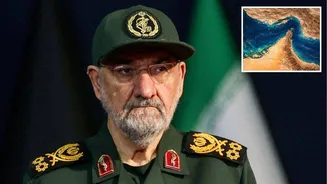
Iran's Parliament speaker and top negotiator, Mohammad Bagher Ghalibaf, on Sunday threatened to launch swifter and more forceful responses to US attacks,
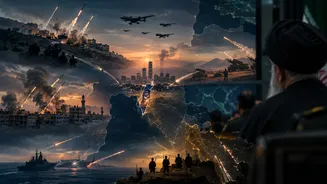
after an exchange of fire in which Tehran targeted American warships and the US attacked Iranian tankers. Attacks in West Asia resumed last week after roughly a month of relative calm. "The Americans must have understood that the era of proportionate responses has come to an end," said Ghalibaf in a speech carried by state media, adding that "any aggression against Iran's interests and security will receive a faster, more intense and more painful response".
A Widening Front in the Strait
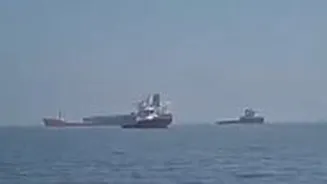
The remarks come after Tehran on Sunday said it struck an unmanned US military boat in the Strait of Hormuz. Tehran said the vessel was trying to enter a restricted area in the Strait of Hormuz.
The US Central Command (CENTCOM), which oversees the US military operations in the Middle East, is yet to respond to the claim.
The strikes come a day after the US CENTCOM said it struck Iranian oil tankers in retaliation for Iran launching ballistic missiles at Navy warships.
Tit-for-Tat: Ships for Ships
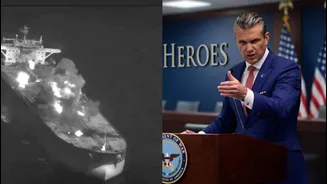
The CENTCOM on Saturday said it struck three Iranian oil tankers after Navy warships were targeted with missiles. It said that the forces "disabled" two Iranian oil tankers off Iran's Kharg island and "completely destroyed" an unladen Iranian crude oil tanker in the Sea of Oman.
"Following Iran’s failed attacks, CENTCOM permanently disabled the IRGC crude oil carriers M/T Downy off the coast of Kharg Island and M/T Stark 1 near Jask. American forces also completely destroyed the unladen crude oil carrier M/T Kylo (also known as the 'Noxen') in the Gulf of Oman, striking the vessel in multiple critical locations to render it inoperable after the crew was directed to abandon ship," the US CENTCOM posted on X.
"Let the message to the IRGC be clear: If you shoot at two of our ships, we will impose an even higher economic cost —taking out three of yours,” said Adm. Brad Cooper, CENTCOM commander. “We will not hesitate to defend American forces, and if necessary, destroy Iran’s limited and exposed oil fleet."
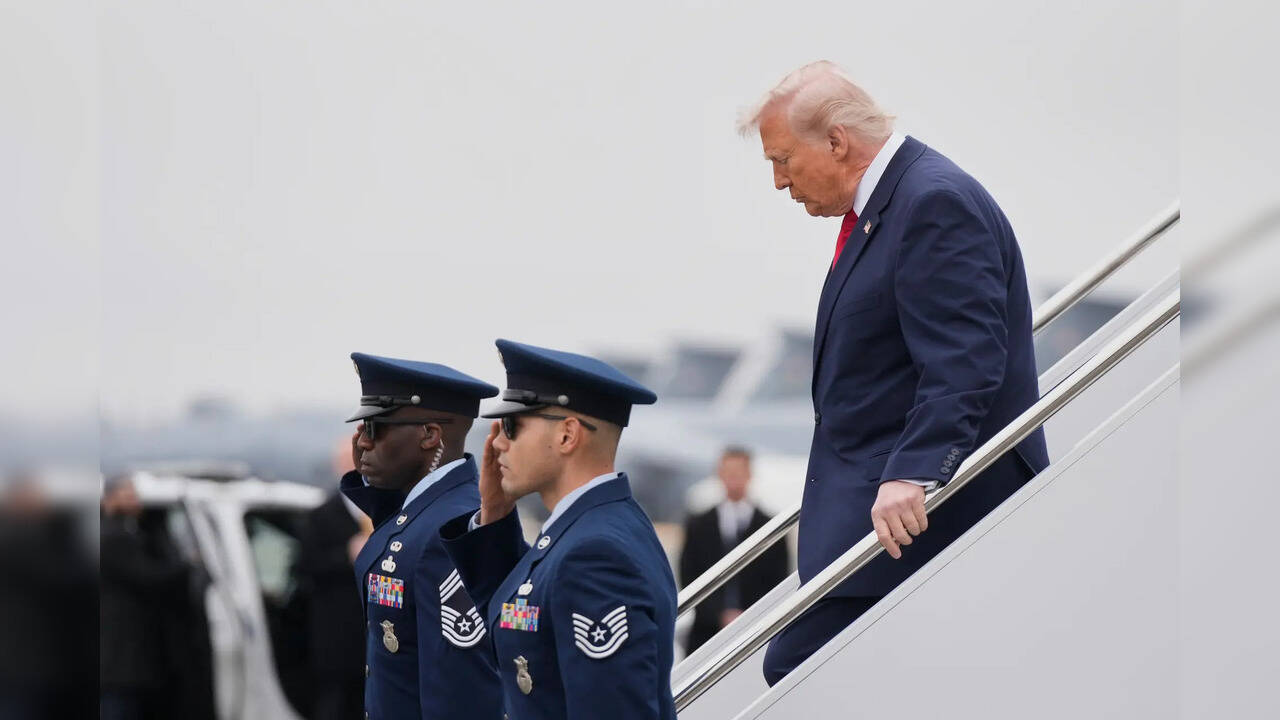
The attacks came a day after US President Donald Trump sought to minimise the conflict that began on February 28 as "small potatoes".
Six Months of On-and-Off War
The war began with the US and Israeli attacks on Iran on February 28. But since a ceasefire agreement was announced in June, on-and-off fighting has persisted with both sides trying to inflict military and economic pain as negotiations have collapsed.
Iran has largely blocked passage through the Strait of Homruz since the outbreak of war on February 28. Washington has imposed a counter-blockade on Iranian ports and last month announced what it called an "economic asphyxiation" campaign on Iran aimed at strangling its already battered economy.
In his speech, Ghalibaf called on authorities to better manage Iranian imports to confront what he called the US campaign "seeking to paralyse the supply cycle and energy management".