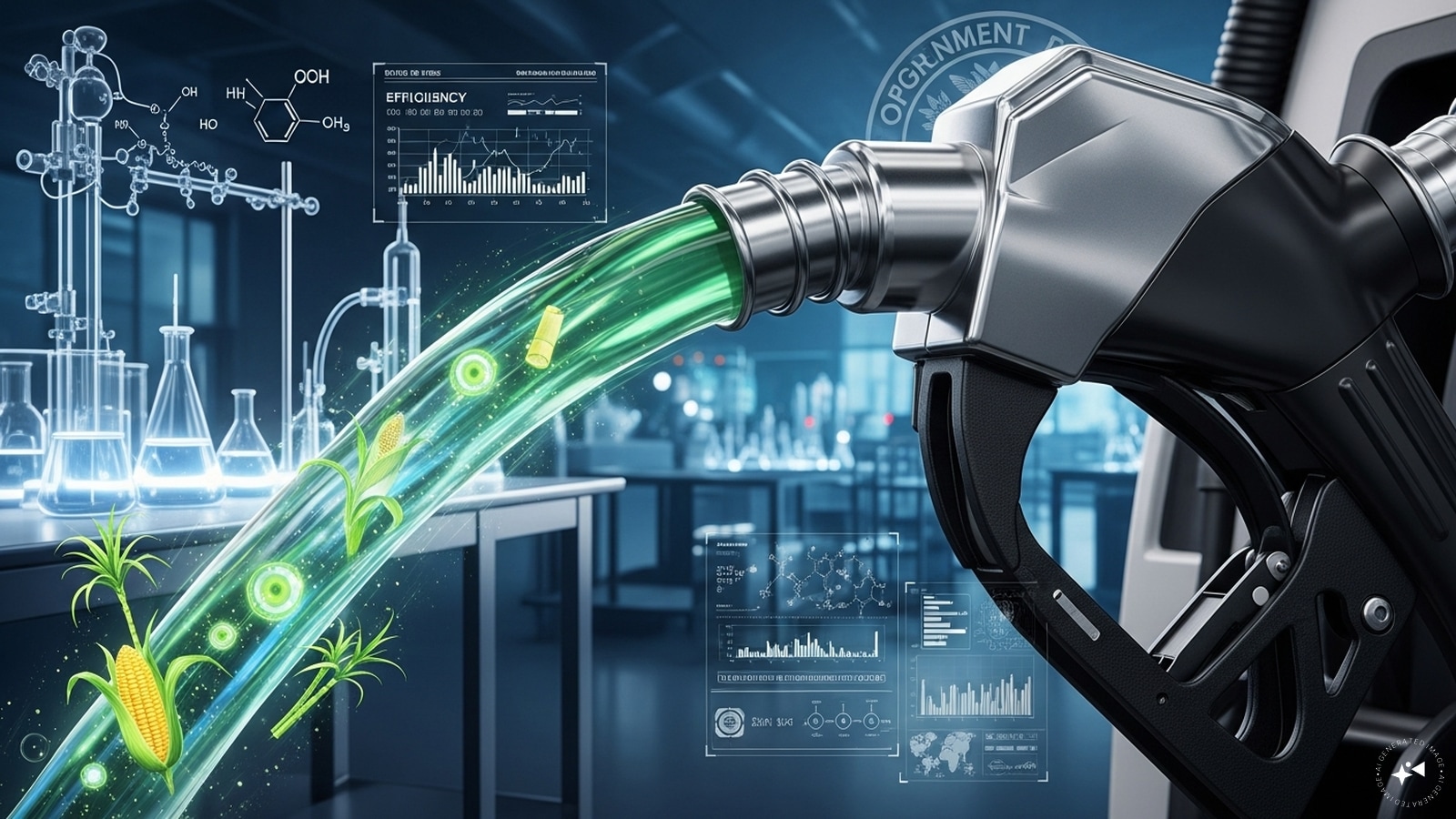









New Delhi: The Centre has not taken any decision to increase ethanol blending in petrol beyond the current 20 per cent level, Minister of State for Petroleum
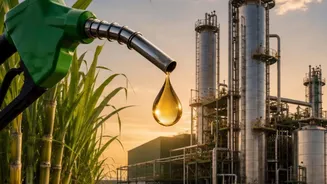
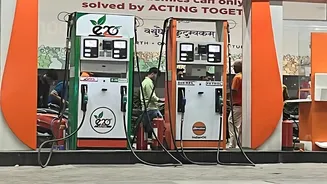
and Natural Gas Suresh Gopi informed the Rajya Sabha on Monday. Replying to a question in a written response, Gopi said any move to increase ethanol blending beyond 20 per cent would be considered only after detailed studies and consultations. "So far, no decision has been taken by the government for increasing ethanol blending with petrol beyond 20 per cent," he said. He added that any future increase would come "only after detailed scientific and technical studies and consultations with all relevant stakeholders, including automobile manufacturers, Oil Marketing Companies and research institutions." According to the minister, India achieved its target of 20 per cent ethanol blending five years ahead of schedule. Average ethanol blending increased from around 1.53 per cent in 2013-14 to 20 per cent in the 2025-26 supply year, following more than two decades of phased implementation.
Since 2014-15, the ethanol blending programme has:
- Saved more than Rs 1.97 trillion in foreign exchange.
- Reduced crude oil imports by nearly 316 lakh tonnes.
- Prevented about 952 lakh tonnes of carbon dioxide emissions.
- Generated over Rs 1.66 lakh crore in additional income for farmers.
- Government Dismisses Widespread Engine Damage Concerns
Gopi said the government has not received any "widespread or substantiated complaints" from vehicle manufacturers, automobile associations or consumer groups regarding engine failure, fuel pump issues, corrosion or water contamination due to E20 fuel. He added that concerns raised in the media and on social media have been scientifically examined.
According to the minister, more than 20 crore two-wheelers and over 3 crore petrol cars, including many not originally certified for E20 fuel, have been running on E15-plus and E19-E20 fuel for over three-and-a-half years and two-and-a-half years, respectively.
The minister told the Upper House that the target was achieved "without any verified evidence of widespread engine failure or vehicle breakdown."
He also cited data from a leading four-wheeler manufacturer, which analysed service records of 2.84 crore vehicles during 2025-26, including 1.5 crore non-E20-certified vehicles, and found no fuel-related damage. A leading two-wheeler manufacturer reported similar results, he added.
The minister said older vehicles designed for E10 fuel may see a marginal mileage reduction of around 3-5 per cent, but E20 offers higher octane and cleaner combustion. He also said vehicle manufacturers continue to honour warranties for vehicles using E20 fuel.
On concerns over food security, Gopi said the ethanol programme uses only surplus grains after meeting the requirements of the Public Distribution System (PDS), the National Food Security Act (NFSA) and buffer stocks.
According to the government:
- Rice supplied for ethanol increased to 39.28 lakh tonnes in 2025-26 (up to June 30) from 31.11 lakh tonnes in 2024-25.
- Maize supplied for ethanol stood at 67.87 lakh tonnes in 2025-26 (up to June 30), compared with 131.18 lakh tonnes in 2024-25.
Gopi said the programme has not affected retail prices of rice or sugar and described it as a: "waste-to-wealth" approach.
On water usage, the minister said the government has diversified ethanol feedstock beyond sugarcane to include maize, whose share in ethanol production increased from zero in 2021-22 to about 37 per cent in 2025-26. He said ethanol plants typically use 3-5 litres of processed water to produce one litre of ethanol and all distilleries are required to operate as zero-liquid-discharge units.
State-run oil marketing companies procured:
- 705.43 crore litres of ethanol worth Rs 49,577 crore in 2025-26 (up to June).
- 1,033.31 crore litres worth Rs 73,996 crore in 2024-25.
- 679.04 crore litres worth Rs 48,757 crore in 2023-24.
Gopi said 501 ethanol suppliers are currently registered with oil marketing companies.
The minister also ruled out introducing non-blended or lower-blend petrol at selected fuel stations.
"There is no proposal to mandate the availability of non-blended or lower-blend petrol at select retail outlets. The Government's policy is to progressively transition towards cleaner, technologically superior and environmentally sustainable fuels in accordance with the National Policy on Biofuels and the Ethanol Blended Petrol (EBP) Programme," he said.