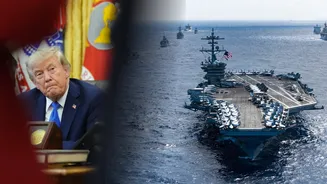





The Trump administration’s “Economic D-Day” campaign against Iran faces significant challenges, as the experience of other heavily sanctioned authoritarian
states suggests that Tehran could withstand economic pressure for years while adapting its trade and financial networks. The administration last week unveiled the economic campaign in an effort to force Iran to reopen the Strait of Hormuz and return to negotiations. However, experts warn that sanctions alone may struggle to compel the Iranian government to change course. How Authoritarian States Adapt Countries including Cuba, North Korea, Venezuela, Russia and Syria have developed ways to cope with Western sanctions and economic restrictions. Sanctions can drive economic activity underground, encouraging the growth of black markets. Governments can also use foreign pressure to rally domestic support, particularly among political and business elites. Iran has expanded trade with neighbouring countries and developed a parallel financial system with China that allows it to bypass parts of the US-led banking system, reducing Washington’s ability to enforce economic restrictions. Russia, meanwhile, has redirected much of its trade towards China and other non-Western countries, while North Korea has used cryptocurrency theft and other methods to generate revenue. Economic Pressure May Not Be Enough Djavad Salehi-Isfahani, an economist at Virginia Tech, said the US had the ability to inflict economic pain but questioned whether that pressure would persuade Iran’s leadership to compromise. “The fact that the U.S. can inflict pain is a given,” he said. “My feeling is that these pressures aren’t going to result in more pressure on the Iranian government to compromise.” Aaron Arnold, a former expert on a United Nations panel monitoring sanctions enforcement against North Korea, said economic measures were more likely to be effective when combined with diplomatic efforts. “These kinds of levers by themselves may not be the most effective tools,” said Arnold, who is now with the Royal United Services Institute. US Targets Wider Network The economic campaign comes alongside broader US efforts to target entities linked to Iran and its military establishment. The US government is also pursuing measures against companies and individuals accused of supporting sanctioned organisations, while attempting to restrict Iran’s access to international finance. The campaign reflects Washington’s broader effort to increase pressure on Tehran and force changes in its behaviour. Europe Faces Winter Gas Risks Meanwhile, the conflict is creating growing concerns over Europe’s energy supplies ahead of winter. European Union gas storage facilities are reportedly around 65 per cent full, their lowest late-summer level in at least 15 years. Companies delayed purchases after expecting Qatar to resume normal liquefied natural gas shipments through the Strait of Hormuz once the conflict eased. With hopes of a quick end to the conflict fading, LNG prices have risen to their highest level in three and a half years, increasing pressure on European energy markets. G20 Turns Attention To China The G20 finance meeting in Asheville, North Carolina, also highlighted growing international concern over China’s manufacturing and export strength. A G20 statement implicitly criticised countries with persistent trade surpluses and called for policies that reduce excessive reliance on exports. The development marks an expansion of pressure on Beijing, with European and Asian economies increasingly concerned that China’s export push could undermine domestic industries. China recorded a trade surplus of around $1.2 trillion in 2025, according to the report.