





What is the story about?
Iran is no longer speaking in absolutes about the Strait of Hormuz. It is speaking in filters. In remarks that mark a significant shift in posture, Iranian
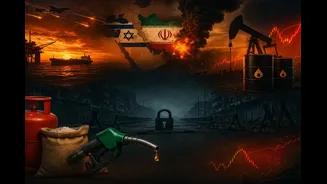
Foreign Minister Abbas Araghchi said Tehran considers it a “legal right” to block vessels linked to its adversaries while allowing passage to countries it deems friendly. The statement reframes the Strait not as closed — but as controlled. That distinction matters. Because the Strait of Hormuz, through which roughly a fifth of global oil flows, is no longer being presented as a neutral corridor under stress. It is being positioned as a calibrated instrument of wartime policy.
‘Friends Through, Foes Blocked’
Araghchi’s comments, made in communication with Antonio Guterres, suggest Iran is attempting to balance two competing narratives. On one hand, Tehran insists it remains committed to ensuring safe navigation. On the other, it is openly stating that vessels linked to what it calls the “Zionist regime” and its allies can be denied passage.
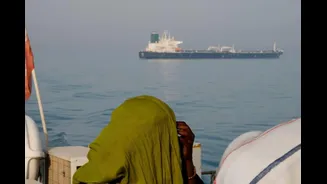
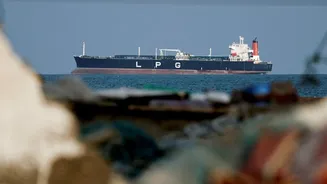
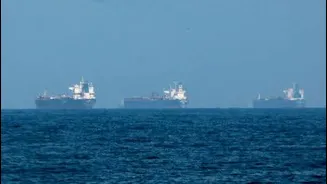
In practical terms, that has translated into selective access. Countries viewed as neutral or friendly — including India, China, Russia, Iraq and Pakistan — have reportedly been allowed transit through the strait. This has already had immediate operational impact, with Indian cargo vessels and LPG carriers beginning to move after days of uncertainty. The message is clear: access is no longer universal. It is conditional.
A Legal Argument — And A Strategic One
Iran’s justification rests on its interpretation of coastal state rights. Araghchi argued that preventing the movement of “enemy” vessels is within Iran’s legal authority, particularly in a conflict environment triggered, in Tehran’s view, by US and Israeli military action. He framed current instability in the strait as a consequence of what he described as “lawbreaking and aggression”.
That argument, however, sits within a contested legal space. Under international maritime law, including frameworks tied to transit passage, the Strait of Hormuz is considered a critical international waterway where freedom of navigation is broadly protected. Iran’s position challenges that interpretation — especially when restrictions are applied selectively. Which brings the issue back to strategy.
Hormuz As Leverage
Beyond legality, the move reflects a broader wartime calculation. Iran has long held the ability to disrupt Hormuz. What is different now is how that capability is being used — not as a blunt threat of closure, but as a calibrated tool. Allowing some ships through while blocking others achieves multiple objectives.
It avoids a complete shutdown that could trigger overwhelming international backlash. It maintains pressure on adversaries. And it signals to neutral states that cooperation with Iran carries tangible benefits. At the same time, Tehran is exploring additional measures. Reports indicate that Iran’s parliament is drafting legislation to impose tolls on vessels transiting the strait — effectively monetising control while formalising its authority over the waterway.
Warzone Dynamics, Not Peacetime Rules
Araghchi went further, describing the Strait as effectively a warzone. He accused US forces of embedding within civilian infrastructure in Gulf countries and warned that their presence could endanger non-combatants — a claim that has not been independently verified. The rhetoric underscores how Tehran is framing the entire maritime space as part of the active conflict. That framing carries risks.
Even selective restrictions can create uncertainty in global shipping markets. Insurance premiums rise. Routes are reconsidered. Energy prices react — sometimes before any physical disruption occurs.
A Narrow Channel, A Wider Impact
At its narrowest point, the Strait of Hormuz is just over 50 kilometres wide. But its strategic significance extends far beyond geography. What Iran is now signalling is not a closure, but a controlled passage system aligned with its wartime interests. That approach introduces unpredictability — not just for adversaries, but for global markets that depend on consistent flow through the corridor.
For now, the ships are still moving. But the rules governing that movement have changed. And in a conflict where leverage is as important as firepower, the Strait of Hormuz is no longer just a route. It is a bargaining chip.