






India’s leather industry is entering a phase of strategic reset as tariff pressures in the United States alter long-standing export dynamics. While the US
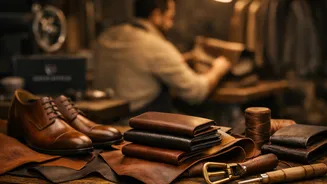
remains a critical destination for Indian leather goods, changing trade conditions are forcing manufacturers and brands to rethink pricing, market focus, and long-term positioning. According to Amol Goel, Founder & CEO Louis Stitch, the impact of US tariffs is not a collapse of opportunity but a recalibration of how Indian leather competes globally. “US tariffs have not shut doors for Indian brands,” Goel told Times Now. “But they have changed the cost structure. This is forcing the industry to reassess markets, product mix, and value proposition.” Also Read - US Could Raise Tariffs on India If They Don't Help on Russian Oil Issue: Trump's Fresh Warning India–US Leather Trade: The Numbers India’s leather and leather product exports have consistently ranged between $4.7 billion and $5.5 billion annually in recent years. The United States accounts for nearly 20 per cent of this trade, making it one of India’s largest single-country buyers. In the current financial cycle, Indian leather exports to the US are estimated at around $850–900 million, spanning footwear, finished leather, accessories and apparel. However, recent tariff increases have pushed total duties on certain Indian leather products to as high as 40–50 per cent, significantly narrowing price competitiveness compared to rivals such as Vietnam, Cambodia, and Italy. “Tariffs don’t just affect the final export price,” Goel said. “They cascade across the value chain — from raw material sourcing and compliance to logistics and payment cycles.” Shift Away from Single-Market Dependence While the US remains strategically important, the tariff environment is accelerating a move away from over-dependence on any one market. Europe already absorbs more than half of India’s leather exports, with countries such as Germany, Italy, the UK, France, and Spain offering relatively stable trade conditions. At the same time, Asian markets like Vietnam, China, Japan, and South Korea, along with parts of the Middle East and Africa, are gaining prominence. “What we are seeing now is deliberate diversification,” Goel explained. “Brands are prioritising markets where duty structures are predictable, and buyers value craftsmanship over aggressive discounting.” From Volume to Value: A Structural Reset Goel believes tariff pressure is accelerating a deeper structural shift within the industry — away from volume-driven exports and toward value-led manufacturing. “For decades, Indian leather competed largely on price,” he said. “That model is becoming unsustainable. The reset is pushing brands to focus on quality, design, branding, and storytelling.” This transition leverages India’s strengths in handcrafted leather, artisanal finishing, and small-batch production, areas that global luxury consumers increasingly value. “At Louis Stitch, our belief has always been that Indian craftsmanship can meet global luxury standards,” Goel added. “The current environment reinforces that conviction.” Domestic Market Emerges as a Stabiliser Even as export strategies evolve, the Indian domestic market is emerging as a critical cushion. Rising disposable incomes, a growing appetite for premium products, and increasing pride in homegrown brands are reshaping demand. “The Indian consumer today is more confident about buying Indian luxury,” Goel said. “They want authenticity, quality, and design — not just a foreign label.” The D2C model, he noted, offers additional resilience by allowing brands to maintain tighter control over pricing, margins, and consumer engagement during periods of global uncertainty. Policy Support and the Road Ahead While brands are adapting, Goel emphasised the need for supportive policy measures to help the sector move up the value chain. Faster export clearances, easier access to working capital, and incentives for value-added manufacturing could strengthen India’s global competitiveness. “This is not about short-term relief,” he said. “It’s about building a future-ready leather ecosystem that is sustainable, design-driven, and globally respected.” A Turning Point for Indian Leather Rather than viewing US tariffs as a setback, Goel sees the current moment as an inflection point. “Every disruption forces a choice,” he said. “You either try to preserve the old model or use the moment to build something stronger. For Indian leather, this reset is an opportunity to move decisively toward premiumisation.” As Indian leather brands recalibrate their markets, elevate craftsmanship, and leverage domestic demand, the industry’s next chapter may be defined less by cost competitiveness and more by confidence in India’s place in the global luxury market.