







What is the story about?
DUBAI, United Arab Emirates (AP) — Iran's recent attacks on oil infrastructure and threats to block a crucial waterway have heightened market anxieties
as the United States vowed to deliver severe military responses. As the conflict enters its 11th day, the ramifications are being felt across the Middle East and beyond. Both the U.S. and Iranian leaders have escalated their rhetoric, with U.S. Defense Secretary Pete Hegseth promising unprecedented military strikes, while Iranian officials dismissed the prospect of negotiations and issued direct threats toward U.S. President Donald Trump.
Iran's Military Actions and Civilian Impact
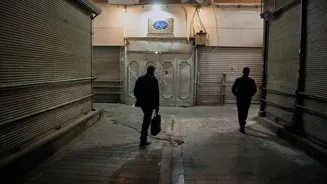
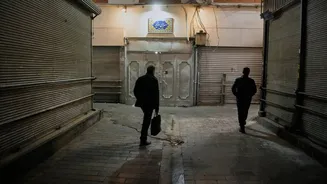
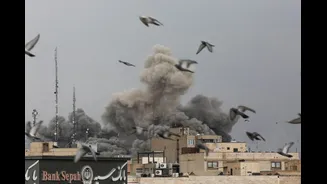
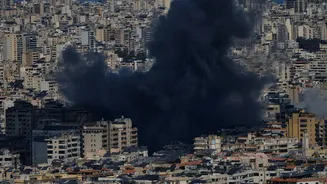
Iran has intensified its attacks against Israel and Gulf Arab nations, prompting Israel to conduct extensive airstrikes in Iran and Lebanon, targeting Hezbollah militants. In Tehran, residents reported experiencing some of the most intense strikes of the conflict, leading to widespread power outages in various neighborhoods. One resident described the situation, stating that the area shook for half an hour due to the overnight bombardment.A 27-year-old mother, who witnessed a residential building being struck, shared her experience on the condition of anonymity to avoid potential repercussions. Many Iranians, seeking safety, have fled to rural areas.
Casualties and Damage in the Gulf Region
The United Arab Emirates reported two additional fatalities following drone strikes that targeted the country, with nearly three dozen drones and missiles intercepted. Firefighters responded to a fire in the industrial city of Ruwais after an Iranian drone attack, although no injuries were reported from that incident.Since the onset of hostilities on February 28, Iranian assaults have resulted in six deaths and 122 injuries in the UAE. In Bahrain, an attack on a residential building in Manama killed a 29-year-old woman and injured eight others, with officials noting that over 100 ballistic missiles and 175 drones have been intercepted since the conflict began.
Sirens were activated in Jerusalem as explosions echoed in Tel Aviv, reflecting the ongoing threat from Iranian missile barrages. Hezbollah, which began its assault on Israel following the war's initiation, has also launched missiles into Israeli territory.
U.S. Military Strategy and Iranian Defiance
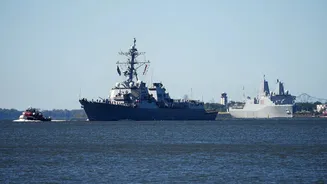
At the Pentagon, Hegseth stated that the day would mark a significant escalation in U.S. military operations within Iran, featuring the highest number of aircraft and strikes to date. He noted that the previous 24 hours had seen the lowest number of Iranian missiles fired since the conflict began.General Dan Caine, chairman of the Joint Chiefs of Staff, reported that U.S. forces have targeted over 5,000 sites. The Pentagon has indicated that approximately 140 U.S. service members have sustained injuries, the majority being minor, while eight have been severely injured and seven killed.
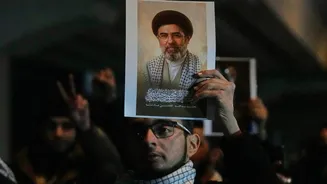
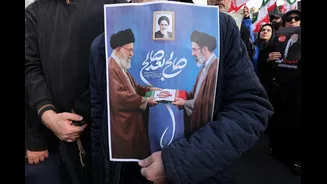
Iran's leadership has remained resolute amid the ongoing strikes against its military and leadership. Mohammad Bagher Qalibaf, Iran's parliament speaker, declared on X that the country is 'definitely not looking for a ceasefire,' asserting that aggressors must be punished to deter future attacks.
Ali Larijani, a senior Iranian security official, issued a warning directed at Trump, stating that Iran does not fear U.S. threats and advised the president to be cautious.
Iran's Energy Infrastructure Attacks
Iran has consistently targeted energy infrastructure in an apparent effort to exert economic pressure on the U.S. and Israel. It has also launched attacks on U.S. military bases in the region. Brent crude oil prices surged to nearly $120 before stabilizing around $90, reflecting a nearly 24% increase since the conflict's start.Iran has effectively obstructed tankers in the Strait of Hormuz, a vital route for 20% of the world's oil. Attacks on merchant vessels near the strait have resulted in at least seven fatalities among sailors, as reported by the International Maritime Organization.
The Iranian Revolutionary Guard declared it would prevent the export of oil to adversarial nations until further notice. Trump warned via social media that any interruption in oil flow through the Strait of Hormuz would result in a significantly stronger U.S. response.
A bulk carrier reported an attack off the coast of the UAE, with the captain describing a loud explosion nearby, according to a British military monitoring center. Amin Nasser, president of Saudi Arabia's Aramco, noted that tankers are being rerouted to avoid the strait, while the East-West pipeline is nearing full capacity.
Displacement and Humanitarian Crisis
The U.N. refugee agency reported that over 667,000 people in Lebanon have registered as displaced, with the number rising significantly in just one day. Additionally, more than 85,000 individuals, primarily Syrians, have crossed into Syria from Lebanon.The British government announced that the volume of commercial flights from the UAE to the U.K. is returning to normal, with 32 flights from Dubai to Britain on Monday and another 36 scheduled for Tuesday. However, British Airways has suspended flights to Jordan, Bahrain, Qatar, Dubai, and Tel Aviv until later this month.
Many foreign nationals have been evacuating the Persian Gulf region, with over 45,000 U.K. citizens and around 40,000 Americans returning home since the conflict began. As a result of the ongoing war, at least 1,230 individuals have died in Iran, 397 in Lebanon, and 12 in Israel, while seven U.S. service members have also lost their lives.