







What is the story about?
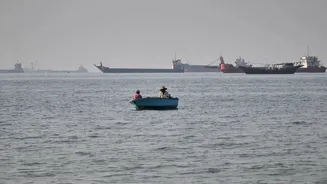
DUBAI, United Arab Emirates (AP) — A ship anchored off the coast of the United Arab Emirates was seized and redirected toward Iran, while another cargo
ship sank following an attack near Oman, authorities reported on Thursday. These incidents signify a rise in tensions in the strategically critical Strait of Hormuz. The identity of the perpetrators remains unclear, but these events coincide with a senior Iranian official's assertion of Iran's authority over the waterway, coupled with claims of the right to seize oil tankers linked to the United States.
Impact on Global Oil Trade
The Strait of Hormuz, through which approximately one-fifth of the world's oil flows, has been a focal point in ongoing discussions between the U.S. and Iran aimed at de-escalating conflict. Iran's control over this crucial passage has disrupted the global economy and significantly increased fuel prices beyond the Middle East.Recent instability in the region occurred concurrently with U.S. President Donald Trump's meeting with Chinese leader Xi Jinping in Beijing, where both parties agreed on the necessity of keeping the Strait of Hormuz open.
Details of the Seizures and Sinking
The United Kingdom Maritime Trade Operations center confirmed that the seized ship was taken by unauthorized personnel while anchored 38 nautical miles northeast of Fujairah, a key oil export terminal that has faced multiple attacks during the ongoing conflict with Iran. The center is currently investigating the incident.In a separate incident, an Indian-flagged cargo ship sank off Oman's coast after an attack ignited a fire aboard the vessel, which was traveling from Somalia to Sharjah. Indian officials reported that all 14 crew members were rescued by Oman’s coast guard and are safe.
The Indian foreign ministry condemned the attack as “unacceptable,” reiterating its disapproval of ongoing assaults on commercial shipping and civilian mariners without identifying the aggressor.
Diplomatic Tensions and Military Movements
Reports from Iranian semi-official news agencies indicated that Chinese ships began transiting the Strait under new Iranian protocols following requests from Chinese officials. This development coincided with Prime Minister Benjamin Netanyahu's announcement of a covert visit to the UAE, which the UAE government promptly denied.The UAE normalized relations with Israel in 2020, a move that Iran has openly criticized. Analysts suggest Netanyahu's public acknowledgment of the visit may have been a strategic effort to bolster support for his political party ahead of upcoming elections.
Iran's Stance on Negotiations
Iran has stated it will not engage in further negotiations with the United States unless five specific conditions are met, including compensation for war damages and recognition of Iran's sovereignty over the Strait of Hormuz. The White House is unlikely to accept these terms, which would effectively formalize Iran's control over the waterway.Iran's senior vice president, Mohammadreza Aref, emphasized that the strait is an integral part of Iran and that the country will not relinquish control over it.
Legal Justifications for Seizures
Iran's judiciary spokesperson asserted that the nation has a legal right to seize oil tankers in the strait associated with the U.S., claiming that the U.S. has breached international maritime laws. This statement did not reference the ship seized on Thursday specifically.Previously, Iran captured several vessels, including the tanker Ocean Koi, alleging that it was interfering with oil exports and Iranian interests. The U.S. had sanctioned the Ocean Koi in February for transporting Iranian oil.
U.S. Military Response
Admiral Brad Cooper, the top U.S. commander in the Middle East, remarked that while he believes Iran's military capabilities have been significantly weakened, its threats continue to influence shipping operations in the Strait of Hormuz.He stated that the U.S. possesses the military strength to ensure the Strait's reopening and to escort vessels but deferred to policymakers on the best approach amid sensitive negotiations.