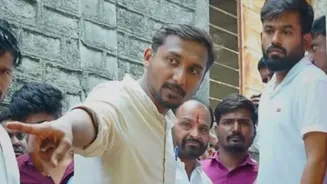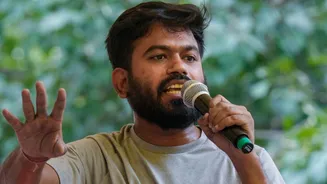






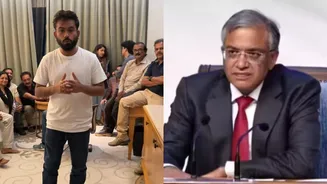
YouTuber Dhruv Rathee, who was detained on Saturday morning, ahead of the Cockroach Janta Party (CJP) October 10 protest against Chief Election Commissioner
(CEC) Gyanesh Kumar amid the SIR and voter deletion row, was released late last night, reports said. Rathee was detained from his residence in Gurugram's Sector 56 before CJP's proposed protest yesterday. Rathee, who lives abroad, had come to join the demonstration against the CEC. The YouTuber after being released posted a video message on X and alleged that he was neither "detained or arrested but was kidnapped." Rathee narrated the ordeal how the cops arrived at his house and took him away. The YouTuber referred to cops as "goons" questioning police action. He also hit out at the government and said that this doesn't happen in a democracy adding "PM Modi is turning it into a dictatorship."
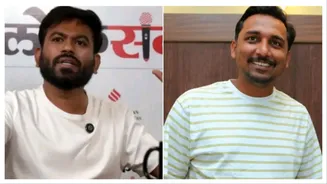
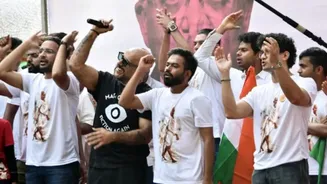
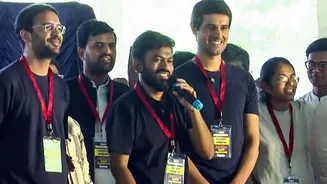
Not just Dhruv Rathee, but all the top leaders of the CJP, including founder Abhijeet Dipke and co-founders Saurav Das and Ashutosh Ranka, and hundreds and thousands of protesters were detained by Delhi Police on Saturday. While the protesters and supporters were released lately, CJP's top brass - including Dipke, Das, and Ranka - have been taken under preventive custody and are likely to be produced before a magistrate today. Meanwhile, the CJP, in the wake of its leaders’ detention, has given a call that it will march to Jantar Mantar every day till the time CEC Gyanesh Kumar's exit.
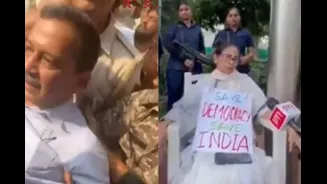
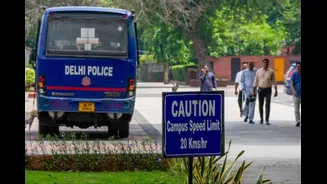
On Saturday, the national capital was turned into a fortress as police launched a sweeping crackdown, detaining CJP leader Abhijeet Dipke, Rathee and nearly 500 protesters, foiling their bid to reach Jantar Mantar, while the Opposition denounced the situation as "worse than the Emergency."
Dipke and two other CJP leaders, Saurav Das and Ashutosh Ranka, were detained by Delhi Police from inside the aircraft as soon as their flight from Mumbai landed in the national capital. The CJP leaders had arrived here to lead the protest against Chief Election Commissioner Gyanesh Kumar.
In a video shared by the CJP, Dipke could be heard telling police officers who entered the aircraft, "We are here to be arrested, come and arrest us."
Before the detention, police personnel told the CJP leaders that they did not have permission to hold their protest at Jantar Mantar.
Dipke said CJP leaders were being detained as if they were criminals. He said that even former prime minister Indira Gandhi did not do this, adding that the current situation amounted to a "dictatorship".
Former chief minister of Kerala Pinrayi Vijayan, former Tripura chief minister Manik Sarkar and CPM MP John Brittas were also detained by police.
Around 1 pm, scores of protesters hurled stones at security personnel near the Akashwani Bhawan on Imtiaz Ali Marg after jumping barricades, injuring two police personnel. The protesters were quickly detained by security personnel.
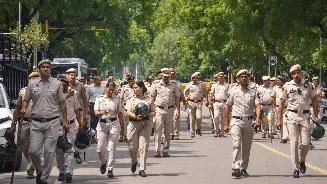
Waves of barricades lined the streets ahead of the CJP protest, with the deployment of over 30,000 police and paramilitary personnel, the closure of 45 metro stations and intensive checks at the city's border points, railway stations, bus terminals, hotels and other sensitive locations.
Dipke Hands Over CJP's Baton To Ajinkya Shinde Till They Are Detained
In a pre-recorded video message released soon after his detention, CJP leader Dipke said the organisation's in-charge, Ajinkya Shinde, would lead its protest at Jantar Mantar. The CJP asserted that the protest would continue nationwide, with or without its leaders.
The massive security arrangements were put in place after Delhi Police denied permission for the demonstration against the CEC, citing inadequate notice and concerns over compliance with rules during an earlier protest.
The city was dotted with police pickets, with intensive checking of vehicles. A large number of police personnel also checked the identity cards of people moving around.
The partial lockdown-like situation was marked by the closure of 45 metro stations, traffic diversions and heavy barricading along 30 road stretches in the areas around Jantar Mantar. Delhi's borders were also tightly secured, with heavy police deployment. Police personnel also used steel spikes on some roads to prevent forced entry without inspection of vehicles.
With inputs from PTI