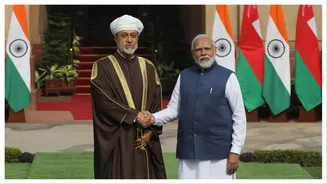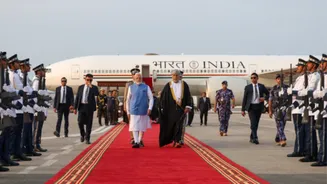






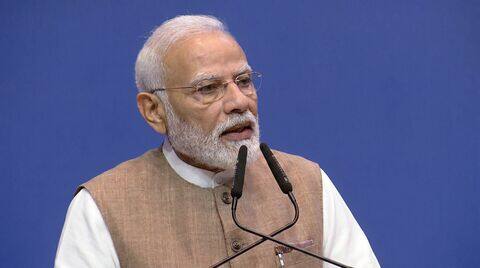
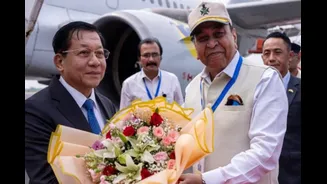

As the India‑Oman Comprehensive Economic Partnership Agreement (CEPA) came into force on Monday, Union Commerce and Industry Minister Piyush Goyal called
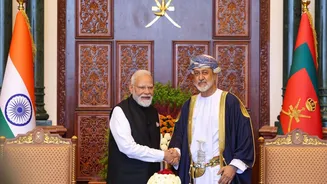
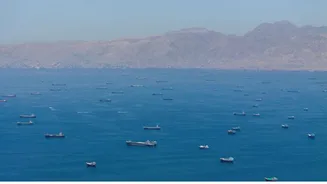
it a statement of "civilisational trust". The agreement aims to drive merchandise exports from the baseline of roughly $4.06 billion past the $6 billion mark, with a medium-term goal of reaching $10 billion. With the CEPA, India's merchandise exports to the Gulf nation are officially targeted to grow by 50 per cent over the next three years. Under the agreement, Oman has offered India zero-duty access on 98.08 per cent of its tariff lines, covering 99.38 per cent of India’s exports to the nation. All major labour-intensive sectors, including gems and jewellery, textiles, leather, footwear, sports goods, plastics, furniture, agricultural products, engineering products, pharmaceuticals, medical devices, and automobiles, receive full tariff elimination. Though Oman is a small country, it has strategic importance as it borders the Strait of Hormuz, an important maritime chokepoint. Asian companies use this passage for oil trade. Oman is an important strategic partner in the region for India, as it is a key gateway for Indian goods and services to the wider Middle Eastern and African nations. India is offering tariff liberalisation on 77.79 per cent of its total tariff lines which covers 94.81 per cent of India’s imports from Oman by value. For the products of export interest to Oman and which are sensitive to India, the offer is mostly a tariff-rate quota (TRQ) based tariff liberalisation. With this, several Indian products will enjoy immediate duty-free access to the Omani market. These include natural honey, cashews, boneless meat, bakery products, chocolate and sugar confectionery, mineral water, cheese, curd, milk, cream, frozen fish, and butter, according to PTI. India and Oman signed the CEPA in December last year, during Prime Minister Narendra Modi’s visit to Muscat.
Sensitive products kept in exclusion list
To safeguard its interest, sensitive products have been kept in the exclusion category by India without offering any concessions, especially agricultural products, including dairy, tea, coffee, rubber, and tobacco products, gold and silver bullion, jewellery, other labour-intensive products such as footwear, sports goods, and scrap of many base metals.
Removal of the 5% tariff will improve the competitiveness of Indian vehicles. The pact will grant binding zero-duty access for key finished medicines and vaccines.
The services sector, a strong driver of India’s economy, will also see wide-ranging benefits. Oman’s substantial global services imports amounting to $12.52 billion, with the share of India's exports in Oman's global imports basket as 5.31 per cent, indicating significant untapped potential for Indian service providers.
How it benefits Indian professionals
A major highlight of the CEPA is the enhanced mobility framework for Indian professionals. For the first time, Oman has offered wide-ranging commitments under Mode 4, including a notable increase in the quota for Intra-Corporate Transferees from 20 per cent to 50 per cent, together with a longer permitted duration of stay for Contractual Service Suppliers — extended from the existing 90 days to two years, with the possibility of a further two-year extension.
The agreement also provides for more liberal entry and stay conditions for skilled professionals in key sectors such as accountancy, taxation, architecture, medical and allied services, supporting deeper and more seamless professional engagement.
Moreover, it features a comprehensive and forward-looking services package, with Oman extending substantial commitments across a broad spectrum of sectors including Computer Related Services, Business and Professional Services, Audio-visual Services, Research and Development, Education and Health Services.
These commitments are expected to unlock significant new opportunities for Indian service providers, promote high-value job creation, and support expanding commercial engagement between the two countries.