






What is the story about?
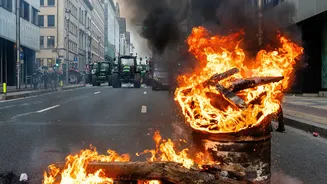
Farmers in Europe have been conducting massive protests for more than a week now by blocking roads with their tractors and even setting fire outside government
structures due to their frustration with the EU-Mercosur trade agreement and delayed subsidies. In another incident in Brussels, there were clashes between police and protestors outside the European Parliament in the course of a European Council summit on December 18, 2025. Drone shots showed tractors lined up in streets, bonfires, and banners protesting EU agricultural policies.
The Mercosur pact, aimed at easing trade between the region and other South American nations like Brazil and Argentina, has raised concerns regarding the standards of food safety and the agricultural production of the region.
Tractors obstructed roads with signs that read: “Down with Mercosur, but not our cows.” Phillipe Maydat, regional president of union “Rural Coordination,” condemned the destruction of meat produced at the local level, adding that people are “being forced to buy chicken from Ukraine or Brazil.”
Read more: Musk Vs. EU: Everything About European Union's €120 Million Fine On X That Triggered Geopolitical Row
Spanish farmers protested in Madrid to demand fair prices as well as the implementation of promised guarantees in the trade agreement. “Farmers feel the postponement of the multiannual financial framework of the EU as well as the Mercosur agreement has left them in limbo regarding what they will be doing in the future,” said a protester. “We demand that the trade agreement contains the 'mirror clauses' promised by Minister Planas, which in practice still have to be implemented,” added another.
Initially agreed upon in the late 1990s, the trade pact would scrap tariffs on more than 90 percent of trade in areas such as beef, poultry products, sugar, ethanol, and industrial products. Those in favor of the trade pact claim it lessens reliance on China, while others claim that it may have a negative effect on European farming.
However, Brazilian President Luiz Inácio Lula da Silva called on leaders in Europe to conclude the deal, which he termed essential for multilateral trade. The deal has taken more than two decades to conclude but faces other uncertainties associated with farmer protests and political pressures in major capitals of member states in the EU.
(Written by Pratibha Rathi)