






What is the story about?
Pakistan has stepped up its global campaign against India's decision to place the Indus Waters Treaty (IWT) in abeyance, warning that suspending the decades-old
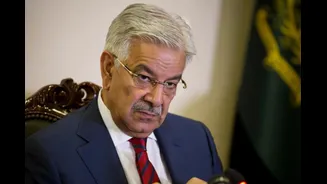
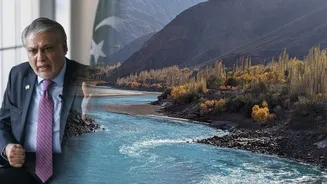
water-sharing agreement could have far-reaching consequences for regional peace and international treaty obligations. At an international conference in Islamabad on Tuesday, Pakistan's Deputy Prime Minister and Foreign Minister Ishaq Dar urged countries not to allow shared water resources to become instruments of political pressure, while reiterating Islamabad's opposition to India's post-Pahalgam decision.
Pakistan Takes Indus Treaty Campaign Global
The conference, titled "Indus Waters Treaty as an Enduring Legal and Institutional Framework", brought together Pakistani officials, legal experts and international specialists on water governance as Islamabad sought to internationalise the dispute.
According to Pakistan's Information Minister Attaullah Tarar, the gathering was the first international seminar dedicated exclusively to the Indus Waters Treaty. The event comes as Pakistan continues raising the issue at various international forums following India's decision to suspend implementation of the treaty after the April 2025 Pahalgam terror attack, in which 26 civilians were killed.
Ishaq Dar Warns Against 'Weaponising Water'
Addressing the conference, Ishaq Dar described the treaty as far more than a bilateral water-sharing arrangement. "The Indus Waters Treaty is not merely a water-sharing arrangement but a vital instrument of regional peace, stability and cooperation."
In a subsequent post on X, Dar argued that shared river systems should remain instruments of cooperation rather than geopolitical pressure.
"Shared waters must never be weaponised. They must remain a bridge between nations, guided by cooperation, dialogue, and respect for international law."
Dar further warned that any attempt to deprive Pakistan of what it considers its treaty rights would carry "profound consequences" for regional peace and security and affect the interests of nearly two billion people across South Asia.
Pakistan Says Treaty Underpins Global Legal Order
Several Pakistani political leaders used the conference to argue that India's decision raises broader questions about international law.
Senator Musadik Malik claimed the treaty had survived three wars between India and Pakistan and warned that weakening such agreements could undermine the post-World War II international legal framework.
"The Indus Waters Treaty has witnessed three wars between the two nuclear powers. If this treaty doesn't hold, no world order that is on paper post World War II will remain secure," he said. Without naming India directly, Malik questioned the value of international agreements if a country could unilaterally suspend them.
Former Foreign Minister Bilawal Bhutto Zardari also stressed that the treaty was never a concession to Pakistan but a legally negotiated international agreement.
Why India Suspended The Indus Waters Treaty
India placed the Indus Waters Treaty in abeyance following the Pahalgam terror attack in April 2025, which New Delhi attributed to Pakistan-backed terrorists. Announcing the decision, the Indian government stated that bilateral water cooperation could not remain insulated from cross-border terrorism and declared that the treaty would remain suspended until Pakistan took credible, verifiable and irreversible action against terror groups operating from its territory.
Prime Minister Narendra Modi subsequently declared that "blood and water cannot flow together," signalling a fundamental shift in India's approach towards bilateral engagement with Pakistan.
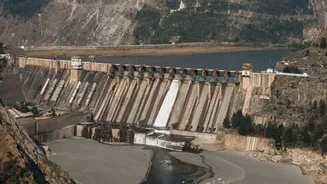
The suspension has significant implications for Pakistan, whose agriculture, irrigation network and hydropower generation depend heavily on the Indus River system. The decision has also ended India's routine sharing of hydrological data with Pakistan, limiting Islamabad's ability to forecast river flows and manage reservoirs efficiently.