







What is the story about?
Customers who have taken loan are set to get an extra layer of safeguard by the Reserve Bank of India (RBI) as it has introduced a comprehensive loan recovery
framework to protect borrowers from harassment. The framework also aims to ensure fair recovery practices by banks and regulated lenders. The new guidelines by the RBI lay down detailed rules governing how lenders and recovery agents can communicate with borrowers, and will be effective from 1 January 2027. It also talks about the conduct related to field visits, and even use technology to recover dues, and also formally regulates the remote locking of financed smartphones, tablets and laptops in the event of prolonged loan defaults.
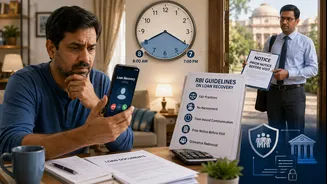
Recovery calls and visits: 8 AM to 7 PM
Under the revised norms, recovery-related calls and visits will generally be permitted only between 8 AM and 7 PM. Any communication beyond these hours will require the borrower's prior request or explicit consent.
Further, the recovery agents will also need to exercise sensitivity in exceptional circumstances. Borrowers should not be approached during situations such as bereavement, medical emergencies or family celebrations like weddings.
Recovery agents are also prohibited from using abusive, threatening or intimidating language. Anonymous calls, repeated harassment, public humiliation or threats involving a borrower's family, assets or reputation are strictly forbidden.
Prior notice before visit:
RBI said the borrowers must receive at least one day's prior notice. Banks are also required to disclose the identity of the recovery agency handling the case.
It also worked to strengthen the social media protection of the borrowers as it said the recovery agents cannot publish or circulate a borrower's personal information, photographs, videos or audio recordings to pressure or shame them into repayment.
Amitraj Kaushal, Advocate at Supreme Court of India on the call timings for the recovery said, "Instead of a borrower feeling cornered by an anonymous voice at odd hours, they are dealing with someone accountable, on record within defined limits. That alone changes the power balance in these conversations more than people realise."
He said the call-recording, agent-identification and restricted calling-hour requirements are the most meaningful change of the entire framework, because it shifts the burden of proof.
"Earlier, a harassment complaint usually came down to the borrower's word against the agent's and borrowers rarely won that argument. Now with mandatory call recording retained for six months and a verifiable agent identity, there is actual evidence to point to," he said.