






Mumbai: The massive traffic jam on the Mumbai–Pune Expressway finally began to clear after nearly 32 hours, bringing an end to a nightmare for thousands
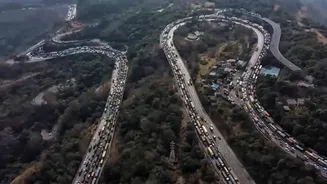
of commuters, including women, elderly passengers and children, who were stuck on the highway for over 8 to 14 hours with little access to food, water or basic facilities. The propane gas tanker that caused the traffic jam was removed around 1:30 am after midnight, following which traffic began to move gradually. The chaos began on Tuesday evening around 5pm, after a tanker carrying highly flammable propylene gas overturned near the Adoshi tunnel in Raigad district. What Actually Failed ? The accident occurred around 50 metres ahead of the tunnel in the Borghat stretch of the Khandala ghat section. Soon after the crash, gas started leaking from the damaged tanker, raising serious safety concerns. As a precautionary measure, vehicular movement was completely halted on both sides of the expressway, towards Mumbai as well as Pune. The shutdown triggered a massive traffic jam, with vehicles coming to a standstill and queues stretching for several kilometres within hours. Many commuters were left stranded throughout the night and most of Wednesday, unable to move forward or turn back, according to reports. Emergency teams from the National Disaster Response Force (NDRF), State Disaster Response Force (SDRF) and Bharat Petroleum were rushed to the site to control the gas leak. The Pune–Mumbai carriageway was fully closed, and traffic was diverted to the old Mumbai–Pune Highway. To manage the pressure, vehicles were intermittently allowed to move towards Mumbai from the Pune side in 15 to 20-minute intervals, but the situation continued to worsen as the gas leak persisted till Wednesday evening. By Wednesday evening, traffic queues had stretched to nearly 20 kilometres, turning the expressway into what many commuters described as a “parking lot”. It was only around 10.30 pm that officials managed to complete the transfer of gas from the damaged tanker to another vehicle. The wrecked tanker was later removed with the help of a crane, and the corridor towards Mumbai was reopened in the early hours of Thursday. The prolonged traffic jam severely disrupted bus services as well. According to officials, more than 160 Maharashtra State Road Transport Corporation buses were stranded at various locations on the expressway. On Wednesday alone, 139 bus services were cancelled, including both E-Shivneri and ordinary services. Buses from Pune, Satara, Solapur, Sangli, Kolhapur, Thane, Palghar and Mumbai divisions were among those affected. No Food, No Water, Commuters Stranded for Hours Among those trapped in the massive traffic jam was 57-year-old Sunita Patil, who remained stranded on the Mumbai–Pune Expressway for over seven hours without food or water. Her son, Aadesh, told TOI that the family decided they could not leave her alone in such conditions. Despite two-wheelers being barred on the expressway, Sunita’s other son, Sandesh, rode a two-wheeler from Kharghar in Navi Mumbai to the accident site at around 1 am on Wednesday to reach her and bring her out of the gridlock. The family took the risk as the situation showed no signs of easing through the night. “She is a senior citizen and there was no food or water available on the expressway, so we could not leave her there alone. We were informed that the issue was likely to continue until morning,” said her son Aadesh, who is also Sandesh’s brother, according to Times of India. Meanwhile, Authorities said teams from the Maharashtra State Road Development Corporation and IRB MPEPL, which operate and maintain the expressway, regularly shared updates through FM radio and social media. Commuters were advised to avoid travel unless absolutely necessary and to take alternate routes. Relief efforts were limited but ongoing. IRB MPEPL and Pune Rural Police teams distributed water and biscuits to stranded passengers at several points. An MSRTC driver said his bus remained stuck near the Adoshi tunnel for nearly nine hours and finally reached Panvel at around 3 am on Wednesday. Anger and frustration poured out on social media as commuters shared their experiences. Many complained about the lack of toilets, drinking water and medical help. Women, children and elderly passengers were among the worst affected, forced to spend hours inside vehicles without basic facilities. Though traffic has now resumed, the incident has once again raised questions about emergency preparedness and passenger safety on one of the country’s busiest expressways.