





What is the story about?
The ongoing conflict in the Middle East has stalled U.S.-brokered peace talks for Ukraine, leading Russian President Vladimir Putin to prepare for new
military offensives against Ukraine, further intensifying pressure on Kyiv. With rising global oil prices bolstering Moscow’s military funding and U.S. air defense resources being depleted due to Iranian strikes, concerns mount regarding the support available for Ukraine as it enters the fifth year of Russia's full-scale invasion.
Challenges for Ukraine and European Allies
Ukraine's European allies have vowed to continue their support; however, internal disputes regarding a significant €90 billion ($106 billion) European Union loan for Kyiv's military and economic needs highlight growing challenges.NATO allies' reluctance to deploy naval assets to safeguard tanker traffic in the Strait of Hormuz has drawn criticism from President Donald Trump, revealing another potential fault line affecting Ukraine's situation.
In an effort to capture Washington's attention, Ukrainian President Volodymyr Zelenskyy has dispatched over 200 military experts to the Gulf to assist in defending against Iranian drones. Nevertheless, Trump dismissed Zelenskyy’s offer, asserting that the U.S. does not require Kyiv’s assistance.
Russian Military Preparations
The Russian military appears poised for a renewed offensive aimed at reclaiming parts of the eastern Donetsk region still under Ukrainian control, alongside potential operations in various other areas.Analysts have observed a buildup of Russian reserves, suggesting that military operations will likely escalate as warmer spring weather improves conditions for ground movement.
The Institute for the Study of War (ISW) has reported an increase in Russian artillery and drone attacks aimed at weakening Ukrainian defenses ahead of ground assaults.
In response, Ukraine has initiated counterattacks in the Dnipropetrovsk and Zaporizhzhia regions to disrupt Russian advances towards regional capitals that serve as critical industrial centers.
The ISW's recent assessment indicates that Ukraine's effective counteractions may compel Russia to choose between reinforcing defenses against these counterattacks or allocating resources for offensive operations elsewhere on the front.
Moreover, Ukrainian forces have intensified midrange strikes targeting Russian logistics, military equipment, and personnel to undermine the anticipated Russian offensive.
Russian war analysts caution that Moscow must significantly bolster its forces to execute any substantial offensive, presenting additional challenges for the Kremlin.
Following a controversial mobilization of 300,000 reservists earlier in the conflict, the Russian military has shifted its strategy to rely on volunteers and foreign fighters attracted by competitive compensation and benefits.
Putin has claimed that approximately 700,000 Russian troops are engaged in Ukraine, a figure comparable to Ukraine's reported troop strength.
Evolving Combat Strategies
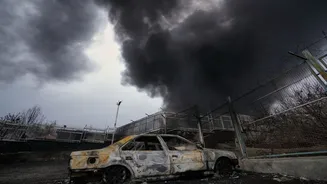
The nature of the conflict has transformed from early large-scale maneuvers involving tanks and mechanized infantry to a war of attrition characterized by protracted, house-to-house combat in devastated eastern Ukrainian towns and villages.Russia has increasingly depended on long-range missiles and drones to target Ukraine's energy infrastructure and other essential facilities.
According to analyst Jack Watling from the Royal United Services Institute, Russia's ability to recruit continues despite heavy casualties inflicted by Ukrainian forces.
As part of its offensive preparations, Russia has been recruiting students for its newly established Drone Forces, offering attractive pay and safer deployment conditions.
Tulsi Gabbard, the U.S. director of national intelligence, informed the Senate Intelligence Committee that “Russia has maintained the upper hand in the war against Ukraine,” indicating that ongoing negotiations between Ukraine and Russia will likely not yield immediate results.
Stalled Negotiations and Political Dynamics
Multiple negotiation attempts have not resulted in significant progress, as both parties remain sharply divided on critical issues.Putin demands that Ukraine withdraw its forces from four regions illegally annexed by Russia, cease its NATO membership aspirations, reduce its military size, and eliminate restrictions on the Russian language and the Moscow-affiliated Orthodox Church—conditions that Zelenskyy has firmly rejected.
Zelenskyy has called for a ceasefire and U.S.-backed security guarantees to prevent future Russian aggression while firmly rejecting territorial claims made by Moscow.
European allies of Kyiv accuse Russia of prolonging negotiations to gain further advantages and assert that Europe must be involved in the discussions. Russia has rebuffed these calls for European participation.
Moscow has declared that it will not permit European troops to oversee a potential ceasefire, labeling them as legitimate targets.
Kremlin spokesman Dmitry Peskov acknowledged signals from European nations expressing a desire to engage in negotiations regarding the Ukrainian situation but emphasized that Russia does not view their involvement as necessary.
Sam Greene, a professor at King’s College London, commented that Moscow's strategy appears to involve limited engagement with Washington to impede Ukraine's ability to alter the battlefield balance while simultaneously keeping European nations at bay.
Trump's Criticism of Zelenskyy
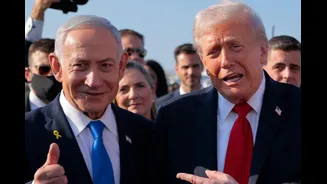
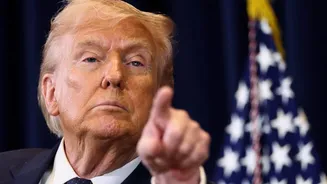
The U.S. has granted Russia a temporary waiver from oil sanctions, allowing sales of Russian crude oil already in transit, much to the dismay of Kyiv and its European allies.Trump has criticized Zelenskyy, suggesting that he is a barrier to peace. “He has to get on the ball, and he has to get a deal done,” Trump remarked regarding the Ukrainian leader earlier this month.
In an NBC News interview, Trump noted that while Putin seems amenable to a deal, “it’s much harder to reach a deal with Zelenskyy.”
Trump also dismissed Zelenskyy’s offer of assistance in protecting U.S. forces from Iranian drones, stating, “No, we don’t need their help on drone defense.”
In light of the ongoing conflict in the Middle East, Zelenskyy has expressed concern that the situation could adversely affect Ukraine, sharing his “very bad feeling” about the potential implications for peace negotiations, which he believes are being “constantly postponed” while Russia benefits from elevated oil prices and Ukraine faces a shortage of U.S.-made Patriot missiles.