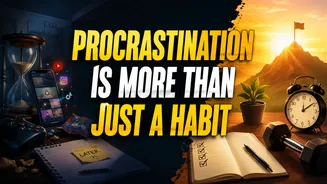








Prashant Kirad, through his recent LinkedIn post, has talked about how procrastination is more than a habit; it is a lifestyle and an identity that individuals
carry with them. He says, “90% of people are not stuck because they are lazy… they are stuck because procrastination has become their lifestyle.” Individuals often find themselves delaying or postponing a task or work. This is not because they do not know the answer to it, but because their brain avoids the uncomfortable work and tasks, and this is the real problem of procrastination. The individuals are aware of what they want to do, as he puts it, “Gym join karna hai - pata hai, Content start karna hai - pata hai, Padhai karni hai - pata hai, Skills improve karni hai - pata hai,” (Have to join- I know, Start content creation- I know, Have to study- I know, Have to improve skills- I know), but here, the main problem is not whether an individual possesses knowledge or not. The main problem is the action, which could be a task they want to do or anything important. According to him, when we begin doing some important task or work, our brain tries to release easy dopamine, which could be in the form of scrolling, watching random videos, and the constant thought of postponing work by saying “kal se karungi” (will do it from tomorrow), and unnecessary planning. This is what procrastination does, delays the work. And with time, this procrastination slowly develops into an individual's identity; as he continues, he says, ‘Sabse dangerous part pata hai apko pata hai kya?” (Do you know what is the most dangerous part?), questioning the individual's awareness about the most dangerous part of procrastination, which is its development into someone's identity. One keeps feeling that they are busy in life, but in reality, they are just busy and not moving ahead. He further explains the solution: it's not motivation but:
- Small actions
- Less distractions
- Facing the Uncomfortable Moments
All of the three things combine together as the solution to procrastination because motivation is not enough to stop procrastination. He has put emphasis on clarity, as it helps the individual to understand what action to take. The overthinking about the action only delays it further and further, and the action never happens.
He concludes his message with, “The longer you delay important things, the harder your mind makes them look,” suggesting that students achieve goals with small actions and little distractions, as this will help them avoid procrastination.
(Disclaimer – This article summarises a post by Prashant Kirad. While Times Now has verified the public data presented, the interpretations of 'intent' remain those of the creator. This content is for educational purposes and does not substitute professional medical/nutritional advice.)