




What is the story about?
DUBAI, United Arab Emirates (AP) — U.S. military leaders confirmed on Tuesday that a ceasefire with Iran remains effective, following recent attacks attributed
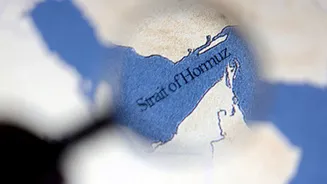
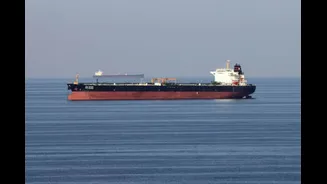
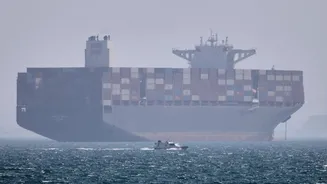
to Tehran in the Strait of Hormuz and against the United Arab Emirates. The truce, established nearly a month ago, appears to be holding as U.S. forces continue their efforts to reopen this crucial waterway for global energy supply. On Monday, the U.S. reported sinking six small Iranian boats that posed a threat to commercial shipping.
Shipping Disruptions in the Strait
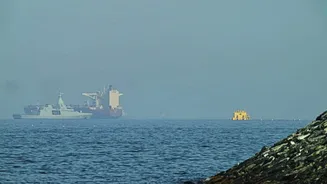
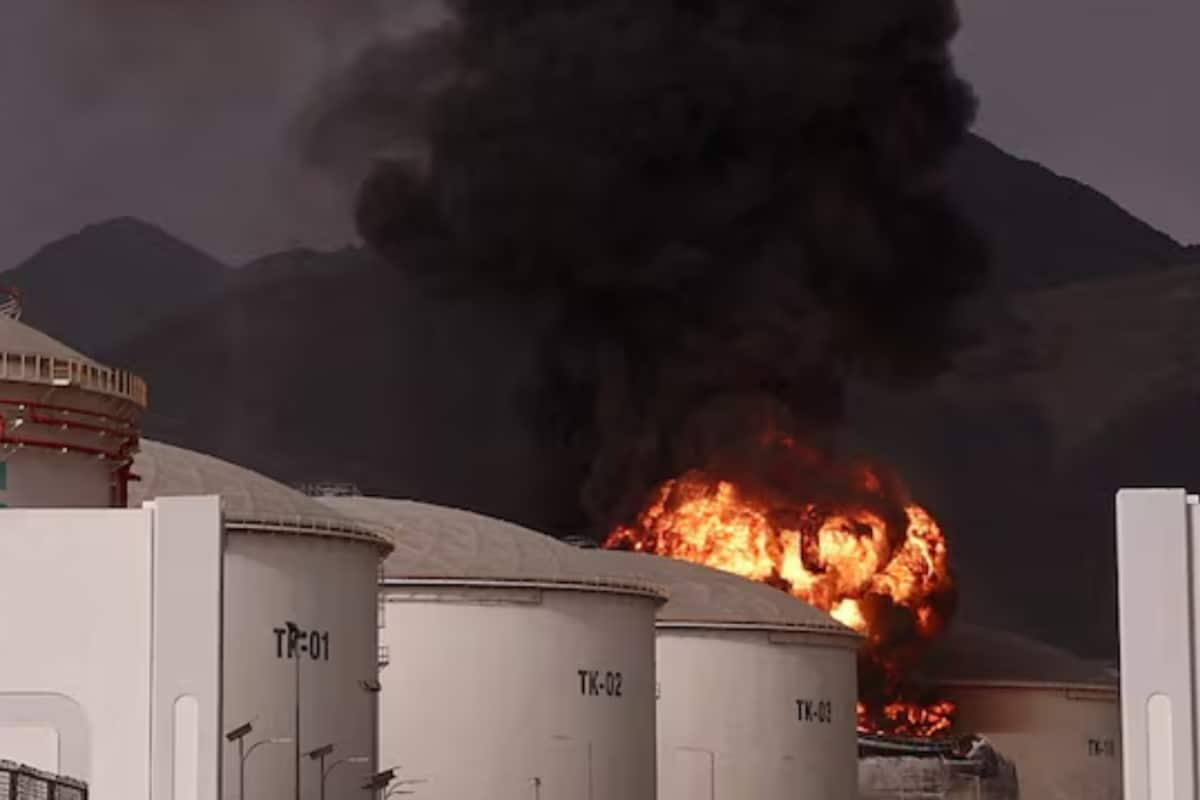
Currently, only two merchant ships have successfully navigated a newly established U.S.-guarded route, while numerous others remain stranded in the Persian Gulf. The effectiveness of U.S. military actions in reassuring shippers without escalating conflict remains uncertain.The UAE, an essential U.S. ally, reported being targeted by Iranian missiles and drones for a second consecutive day on Tuesday. These attacks resulted in injuries to at least three individuals the previous day, and a drone attack ignited a fire at a significant oil facility in Fujairah.
Iran's Response to U.S. Military Actions
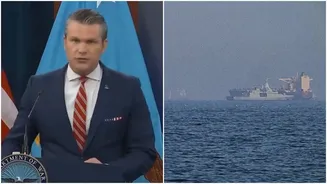
U.S. Defense Secretary Pete Hegseth and General Dan Caine, the top U.S. military officer, held a press conference on Tuesday, stating that Iran's recent actions have not escalated to what Caine referred to as 'major combat operations.' He noted that Tuesday was relatively calm in the strait.Hegseth affirmed, 'No, the ceasefire is not over,' supporting Caine's assessment prior to the latest attacks on the UAE.
In contrast, Iran has accused the U.S. of violating the ceasefire. Iranian parliament speaker Mohammad Bagher Qalibaf criticized the U.S. for undermining regional stability, suggesting that Iran has yet to fully respond to U.S. attempts to reopen the waterway.
Qalibaf stated, 'We know full well that the continuation of the status quo is intolerable for America; while we have not even begun yet.' His remarks did not address ongoing negotiations with the U.S., which are currently communicated through Pakistan.
Disputing U.S. claims of sinking six boats, an Iranian military commander reported that two civilian cargo vessels were struck on Monday, resulting in the deaths of five civilians, according to Iranian state television.
U.S. Military Operations in the Region
General Caine indicated that over 100 U.S. military aircraft are actively patrolling the skies above the strait. He remarked, 'Since the ceasefire was announced, Iran has fired at commercial vessels nine times and seized two container ships, and they’ve attacked U.S. forces more than 10 times – all below the threshold of restarting major combat operations at this point.'The U.S. administration has referenced the April 8 ceasefire to argue that the president is not required to formally update Congress on military actions under the War Powers Resolution, which generally mandates congressional approval for military activities after 60 days.
Concerns Among Shipping Companies
To date, only two U.S.-flagged merchant vessels are reported to have traversed the strait via the new lane established by the U.S.Hamburg-based shipping company Hapag-Lloyd AG stated, 'At this point in time our risk assessment remains unchanged. Transits through the Strait of Hormuz are for the moment not possible for our ships.'
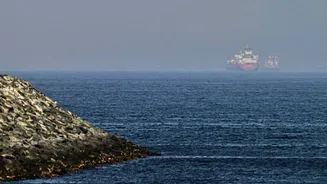
Ship tracking data revealed that a Panamanian-flagged crude oil tanker was heading towards the center of the strait on Tuesday after departing from an anchorage in the Persian Gulf, though it remains unclear if it will attempt to pass through.
Iran has reportedly targeted vessels that navigate without utilizing its designated route, which often requires vetting by Iran's Revolutionary Guard and payment.
The U.S.-approved 'Project Freedom' route traverses the territorial waters of Oman to the south.
Torbjorn Soltvedt, principal Middle East analyst at Verisk Maplecroft, commented, 'For shipping companies and for insurance companies, they still have to wait and see how this plays out. This initiative alone isn’t something that looks like it’s going to open the Strait of Hormuz.'
Recent Attacks on the UAE
The United Arab Emirates reported that its air defenses intercepted 15 missiles and four drones launched by Iran. The Defense Ministry confirmed that air defenses were responding to another Iranian drone and missile attack on Tuesday.Indian Prime Minister Narendra Modi condemned the attacks, labeling the targeting of civilians and infrastructure as 'unacceptable.' He expressed India's solidarity with the UAE and emphasized the importance of safe and uninterrupted shipping through the Strait of Hormuz.
While Tehran did not confirm the attacks, Iran’s Foreign Minister Abbas Araghchi warned both the U.S. and the UAE to avoid being drawn back into conflict.
Pakistan and Saudi Arabia also condemned the strikes against the UAE, with Saudi Arabia's condemnation coming despite their increasingly strained relations with the UAE.
Global Economic Implications of the Strait's Disruption
The ongoing disruption of the Strait of Hormuz has significantly affected countries in Europe and Asia reliant on oil and gas from the Persian Gulf, resulting in rising prices globally.In response, the U.S. has implemented a naval blockade on Iranian ports since April 13, instructing at least 49 commercial vessels to turn back. The U.S. has warned shipping companies of potential sanctions if they pay Iran for passage through the strait.
This blockade has severely impacted Iran's oil revenue, crucial for stabilizing its struggling economy. U.S. officials express hope that the blockade will compel Iran to make concessions regarding its nuclear program and other longstanding issues.