






For decades, Dubai has marketed itself as a sanctuary of stability in a turbulent region — a place where luxury hotels, financial towers and beach clubs
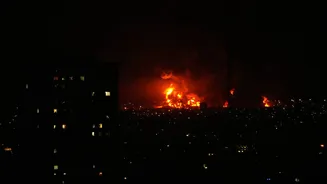
coexist far from the Middle East's wars. Now, the war has arrived. Nearly two weeks after the United States and Israel launched strikes against Iran, waves of Iranian missiles and drones have targeted countries across West Asia. No country has faced more attacks than the United Arab Emirates. According to Emirati officials, more than 1,700 missiles and drones have been launched toward the UAE since the conflict began, with air defenses intercepting the vast majority. Even so, several strikes or falling debris have hit homes, offices and roads in the densely populated city, killing four civilians and leaving dozens injured. For a metropolis built on its reputation as a safe haven for business and tourism, the psychological impact may be as significant as the physical damage.
Why Iran Is Targeting Dubai
Analysts say Dubai represents far more than a convenient military target.
"Dubai is the epicenter of globalization," Fawaz Gerges, a professor of international relations at the London School of Economics, told CNN. "Iranian leaders view it as a symbol of the Western-led economic order. If you rattle Dubai, you rattle confidence in the entire system."
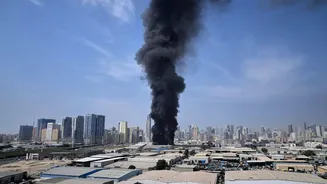
Images of smoke rising near Dubai International Airport or debris striking near luxury hotels quickly circulated worldwide. Thousands have been queueing-up at the airport as exptriates and tourists are struggling to leave the city amid the closure of airspace following relentless attacks launched by Iran.
The strikes on UAE, however, present a deep irony. The Emirates has been a crucial gateway of trade for Iran, especially during times when Tehran has faced international sanctions. Businesses in Iran have long used Dubai as a trading hub. Trade between Iran and the UAE reached roughly $28 billion in 2024, making the Emirates Iran's second-largest trading partner after China.
However, the latest blitz of attacks have been justified by Iran as one towards America and not the Gulf countries. The UAE hosts American military facilities and has invested heavily in US-made defense systems.
Those systems — including advanced missile defenses and fighter aircraft — are now central to protecting Emirati cities from incoming strikes.
What Iran Aimed to Achieve
From Tehran's perspective, the UAE serves multiple strategic purposes in the current conflict. "By striking the UAE, Iran is targeting a key US partner while also sending a message about vulnerability," said Sanam Vakil, director of the Middle East program at Chatham House, told The Washington Post.
The Emirates hosts millions of expatriates and functions as a hub for global finance, aviation and trade. Attacks there reverberate far beyond the Gulf.
Geography also plays a role. The UAE lies just about 100 kilometers across the Persian Gulf from Iran, making it one of the closest and easiest targets for missiles and drones. "It's literally next door," Gerges said. "Reaching Dubai is far easier than reaching more distant targets."
When the war began, many Gulf residents expressed frustration toward the United States and Israel for initiating strikes that risked wider conflict.
But sentiment shifted quickly as Iranian projectiles began falling across the region.
"There was real anger initially at the decision to go to war," said Mina Al-Oraibi, editor of the Emirati newspaper The National. "But once the attacks began hitting the UAE and other Gulf states, the outrage turned toward Iran."
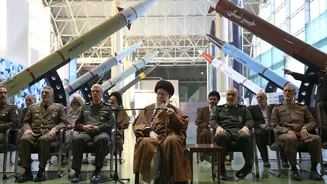
Iranian President Masoud Pezeshkian attempted to ease tensions over the weekend, apologizing to neighboring countries and suggesting that Iran would halt attacks against them unless they were used to launch strikes against Iran.
The reassurance proved short-lived. Fresh waves of drones and missiles soon followed.
How Dubai Refuses to Stop Despite Strikes
Despite the attacks, daily life in Dubai continues with a sense of normalcy.
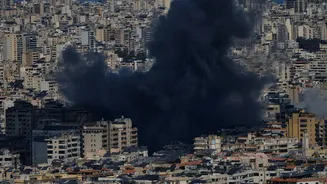
Black smoke rose near the airport after a drone strike one morning. Later that night, a loud boom echoed across the Marina district as debris slammed into a high-rise building. The next day, beachgoers lounged under umbrellas while mobile phones blared missile alerts.
Dubai's economy depends heavily on confidence, and the city's residents — more than 90 percent of whom are foreigners — are accustomed to projecting calm.
Some expatriates fled during the early days of the conflict, but many others have stayed.
At beach clubs along the coastline, the crowds are smaller than usual but far from absent. In markets and malls, business continues at a slower pace as residents monitor the news and weigh whether to leave.
"We may be shaken," Cherif Sleiman, a real-estate executive whose apartment balcony was damaged by drone debris, told the Post. "But the foundation here is strong."
Dubai's rise from desert outpost to global metropolis was built on the promise that it offered something rare in the Middle East: stability.
That reputation is now under strain.
Government officials emphasize that most incoming missiles and drones have been intercepted, and they express confidence in the country's defense systems. But analysts warn that prolonged attacks could permanently alter perceptions.
"If this continues, the image of the Gulf as insulated from regional wars begins to break," Esfandyar Batmanghelidj, chief executive of the Bourse & Bazaar Foundation, an Iran-focused think tank, told CNN.
For now, Dubai remains caught between two realities: a city still functioning as a global playground and financial hub, and a place suddenly within range of a war unfolding just across the water.
How long it can maintain that balance remains a question.