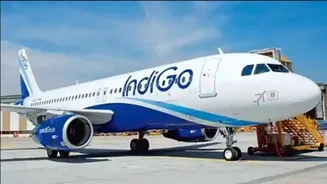

IndiGo, India's dominant low-cost carrier, saw its shares plunge nearly 4% on Monday as the fallout from last week's massive flight disruptions continued
to rattle investor confidence. The stock, a bellwether for the aviation sector, dropped 3.67% to Rs 5,174 on the BSE by 9:37 AM, erasing more than Rs 3,000 crore in market value in early trade. The sell-off followed one of IndiGo’s worst operational breakdowns, with widespread cancellations and delays stranding thousands of passengers across major hubs including Delhi, Mumbai, Bengaluru, and Chennai. Industry insiders estimate over 1,000 flights were affected in just a few days—a blow magnified by IndiGo's dominant 65% domestic market share. What Sparked the Crisis? At the core of the chaos was IndiGo’s scramble to comply with new DGCA norms on flight duty times and mandatory crew rest. The rules, introduced earlier this year to reduce fatigue, collided with peak winter schedules and exposed gaps in the airline’s preparedness. “Crew rostering mismatches snowballed into a domino effect,” said an aviation analyst, noting that advance regulatory warnings were not fully implemented. The DGCA issued IndiGo a show-cause notice, signalling potential fines, audits, or even flight caps—any of which could pressure margins. Meanwhile, frustrated passengers flooded social media with complaints of hours-long delays, missed connections, and poor communication, intensifying the PR crisis. Financial Sting and Road to Recovery The immediate financial hit is estimated at:
Rs 500–700 crore in refunds
Compensation payouts
Emergency crew hiring to stabilise schedules
Longer-term, IndiGo may face rising staff costs as it accelerates hiring to prevent future manpower shortages.
Parent company InterGlobe Aviation moved quickly by activating a crisis war room, resetting schedules, and increasing operational buffers.
A spokesperson said stabilisation was underway, with Monday’s cancellation rate falling below 5%, down from double digits last week.
Investor Radar: Short-Term Pain, Long-Term Gain?
Brokerages remain cautiously optimistic.
Motilal Oswal and Kotak Institutional Equities retained their Buy ratings, pointing to IndiGo’s strong fundamentals, including:
Net cash of Rs 8,500 crore (Q2 FY26)
A backlog of 1,000+ aircraft
India’s booming air travel market, projected at 300 million annual passengers by 2030
“Execution slips happen, but IndiGo’s moat is intact,” said Emkay Global’s aviation lead.
However, the episode exposes vulnerabilities in an industry with thin margins and tight capacity.
Rivals like Air India and SpiceJet—struggling with their own challenges—watched as IndiGo’s on-time performance plunged to 55% last week.
Key Metrics (Converted to List)
Pre-Crisis (Nov 2025)
Share Price: Rs 5,380
Market Cap: Rs 2.05 lakh crore
Cancellations: <2%
OTP: 85%
Crisis Peak (Dec 4–6)
Share Price: Rs 5,250 (intraday low)
Market Cap: Rs 2.00 lakh crore
Cancellations: 12–15%
OTP: 55%
Today (Dec 8)
Share Price: Rs 5,174 (-3.67%)
Market Cap: Rs 1.97 lakh crore
Cancellations: ~4%
OTP: 72% (recovering)
Broader Skies Ahead?
IndiGo’s focus now is on rebuilding trust through tech upgrades—such as AI-driven rostering—and customer-first measures like waiving fees for affected flyers.
But with global aviation margins averaging just 2–3%, even a single misstep can be costly.
As CEO Pieter Elbers expands IndiGo’s international footprint (now 30% of operations), investors expect tighter execution and minimal turbulence ahead.
DGCA’s upcoming ruling could either tighten the leash or clear the runway for a smoother rebound.
If you want this rewritten in shorter format, crisp bullet-style, or SEO-ready, just tell me!