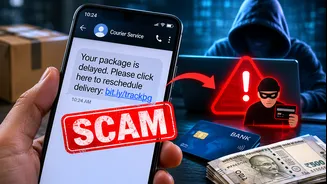








A message claiming that a package is delayed may appear routine, but it could be the first step in a cyber fraud. Cybercriminals are increasingly exploiting
fake courier notifications, e-challan alerts and other seemingly legitimate messages to trick consumers into clicking malicious links or downloading fraudulent Android applications. A single click could expose sensitive personal and banking information, compromise devices and potentially lead to unauthorised financial transactions. Cybercriminals carrying out fake courier delivery scam typically use a technique called smishing. They impersonate trusted institutions such as courier companies, India Post, traffic police, banks or government departments to trick people into clicking malicious links, sharing sensitive information or installing fraudulent applications. Amit Relan, CEO & Co-Founder, mFilterlt said, "The growing use of fake courier notifications, e-challan messages and malicious APKs reflects a larger challenge in the digital ecosystem: the erosion of trust in everyday digital interactions. Cybercriminals are exploiting the credibility of familiar institutions and the urgency of routine transactions to manipulate users into downloading malicious applications. Once installed, these apps can compromise devices, expose sensitive personal and financial information, and enable unauthorized transactions. What makes this threat particularly concerning is that the attack begins with a seemingly legitimate communication, making it difficult for users to identify the risk before the damage occurs." "From an industry standpoint, cybersecurity cannot remain limited to reacting after financial losses have occurred. There is a need for proactive intelligence to identify malicious links, fraudulent applications and impersonation networks at their source. CERT-In's warnings on malicious Android campaigns targeting users through fake transport and e-challan messages highlight how these threats are becoming increasingly sophisticated," he said. Businesses, financial institutions and digital platforms must strengthen their monitoring and response mechanisms to disrupt these threats early. Ultimately, protecting consumers requires a collective effort to build a digital ecosystem where trust is supported by continuous vigilance, timely intervention and accountability." Nipun Popli, Regional Director – Operator Partnerships, India, Infobip said, "Delivery and e-challan scams work because they exploit everyday behaviour. People are used to receiving genuine alerts about parcels, payments, traffic violations and account activity. So, any message that creates urgency - ‘your package is delayed’, ‘pay now to avoid a penalty’, or ‘download this app to verify details’ - can feel credible before the recipient has had a chance to question it." "Consumers should treat unexpected messages with urgency, unfamiliar links, altered sender names, payment demands, or APK-download requests as a warning sign. Do not click, download, reply, or share personal, banking, card or OTP details. Instead, independently verify the message through the courier’s, bank’s or authority’s official app, website or customer-care number, never through the contact details or link included in the message." "The responsibility, however, should not rest only with consumers. Mobile operators, enterprises, regulators and communications providers must work together to protect messaging channels. This means using verified sender identities and secure links, educating customers on what legitimate communications will never ask for, monitoring suspicious traffic, and deploying AI- and machine-learning-based network controls that can identify and block malicious URLs, spoofing attempts and fraudulent traffic before they reach users. Fraud prevention is no longer only a cybersecurity issue; it is foundational to preserving trust in digital communication."