








What is the story about?
At least seven wild elephants were killed after a Delhi-bound Rajdhani Express collided with a herd crossing the railway tracks in Assam’s Nagaon district
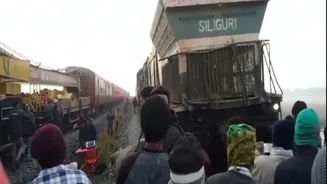
early Saturday, leading to the derailment of the locomotive and five coaches and causing major disruption to rail services in the region. The tragic incident occurred at around 2:23 AM in the Jamunamukh Kampur section under the Lumding Division of the Northeast Frontier Railway (NFR). The Sairang New Delhi Rajdhani Express (Train No. 20507/08) was passing through the area when it struck a herd of elephants that had wandered onto the tracks near Kampur, about 126 km from Guwahati.
According to preliminary information, the herd was crossing the railway line when the high-speed train rammed into them. While at least seven elephants died on the spot, a baby elephant sustained critical injuries. Local residents claimed that the herd consisted of around eight elephants.
Railway officials said the loco pilot spotted the elephants on the track and immediately applied emergency brakes. However, despite the effort, the elephants reportedly dashed into the train, resulting in a powerful collision that led to the derailment of the engine and five coaches. The location of the accident is not a designated elephant corridor, officials added.
Fortunately, no passenger casualties or injuries were reported. Passengers from the affected coaches were temporarily accommodated in vacant berths available in other coaches of the train. Railway sources said that once the train reaches Guwahati, additional coaches will be attached to accommodate all passengers, after which the Rajdhani Express will resume its onward journey to New Delhi.
Following the accident, railway officials and accident relief trains rushed to the site to carry out rescue and restoration work. However, train services to Upper Assam and other parts of the Northeast were significantly affected due to the derailment and the presence of elephant carcasses and debris scattered across the tracks.
Restoration work was underway to clear the line and normalize rail traffic at the earliest, while forest and railway authorities coordinated efforts at the site. The incident once again highlights the growing concern over human wildlife conflict and the risks posed by train movement through forested and fringe areas in the Northeast.