





A memorandum of understanding aimed at ending the war between the US and Iran is due to expire on Monday, with little sign that either side is ready to extend
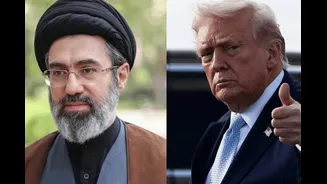
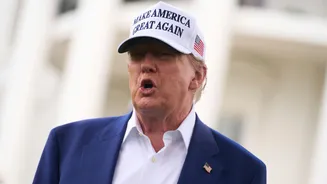
it. The agreement was signed in June after talks hosted by Pakistan. However, both Washington and Tehran have disputed the deal, with each accusing the other of violating its terms. Iranian Foreign Minister Abbas Araghchi said on Saturday that Tehran had not yet decided whether to resume talks with Washington. "We have not yet made a decision to restart negotiations with the United States," Araghchi said in a post on Telegram. US President Donald Trump on Friday threatened to hit Iran hard economically. A day earlier, Treasury Secretary Scott Bessent said Washington would introduce measures against Tehran that have "never been seen" as soon as next week. The US, United Nations and European Union have imposed sanctions, trade restrictions and asset freezes on Iran since the late 1970s over its nuclear programme, human rights record and support for militant groups. Since the war with Iran began in February, Washington has added maritime, energy and financial sanctions and started a naval blockade. Data from the US Treasury Department's Office of Foreign Assets Control (OFAC) shows that more than 1,000 people, vessels and aircraft have been sanctioned since Trump began his second term. Recent measures have targeted Iran's shadow oil fleet, shipping insurers, people and companies helping Iran acquire weapons, and digital exchanges. The measures have also frozen an estimated $500 billion in Iran-linked cryptocurrency. Against this backdrop, experts have outlined several options that the Trump administration could consider to increase economic pressure on Iran.
Sanctions on Chinese 'teapot' refineries
Independent Chinese refineries, often known as "teapots", account for around a quarter of China's refining capacity.
China bought more than 80% of Iran's shipped oil in 2025, according to data from analytics firm Kpler. Independent refineries handle a large part of this trade.
The US could use secondary sanctions against these companies. Such sanctions penalise businesses that help a country already under US sanctions, experts suggested, as per a Reuters report.
Previous US sanctions have discouraged larger independent Chinese refineries from buying Iranian oil. However, sanctions experts say smaller refineries may be less vulnerable because they have limited exposure to the US financial system.
Sanctions on Chinese banks
The US Treasury has already imposed secondary sanctions on smaller banks and companies in China and Hong Kong accused of processing billions of dollars linked to Iranian oil and helping fund weapons purchases.
Treasury officials have warned two larger Chinese banks that they could face secondary sanctions if Iranian funds are found moving through their systems. However, those banks have not been publicly identified.
Targeting larger Chinese banks could discourage other financial institutions from dealing with Iran, experts say. But it could also lead to retaliation from Beijing.
The Trump administration has been trying to avoid a major escalation with China ahead of an expected meeting between Trump and Chinese President Xi Jinping later this year. US officials are also concerned that China could restrict exports of critical minerals needed for advanced technology.
More sanctions on Iran's networks
The US could continue targeting Iranian individuals and companies, as well as businesses in China and the Gulf, that help Tehran bypass sanctions and raise money for its war effort.
Treasury has recently sanctioned companies that have emerged to help Iran exchange oil revenue for imports.
However, Brett Erickson, managing principal of Obsidian Risk Advisors, described this as a "whack-a-mole" approach, saying Iran simply creates new entities to replace those that are sanctioned.
Miad Maleki, a sanctions expert at the Foundation for Defense of Democracies, told Reuters that Bessent was likely signalling a tougher enforcement campaign against oil shippers, buyers and currency exchangers that help Iran pay for imports.
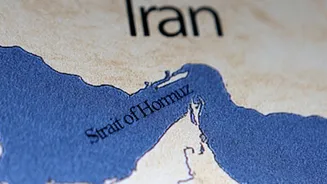
Further sanctions on aviation could also be considered to restrict Iran's ability to move goods, Maleki said. This comes as the US has blockaded shipping through the Strait of Hormuz.
Land blockade
Some US and Israeli officials have suggested the possibility of a land blockade around Iran.
Such a move would require cooperation from Iran's neighbours, including Iraq, Turkey, Pakistan, Afghanistan, Turkmenistan, Azerbaijan and Armenia.
The Trump administration has varying levels of influence and relations with most of these countries. Afghanistan would be a major challenge, although its mountainous border with Iran would also be difficult to patrol.
Trump could have leverage with Pakistan, which recently sought a $10 billion currency swap line from the US Treasury, and Turkey, which wants to rejoin the US F-35 fighter jet programme.
However, experts say a land blockade would be difficult to implement. It could also put greater pressure on ordinary Iranians by restricting imports of food, energy and textiles, without necessarily triggering protests or political pressure on the government.
Secondary tariffs
Trump has repeatedly threatened tariffs on countries that continue to trade with Iran.
However, the US Supreme Court has struck down the legal basis for such tariffs.
The US Senate last week passed a major Russia sanctions bill that also included new sanctions on Iran. The legislation would give Trump new powers to impose tariffs on countries that support Iran's trade and weapons procurement.
The bill still needs to pass the House of Representatives, where it could face opposition from Democrats and some Republicans concerned about the tariff provisions.