


What is the story about?
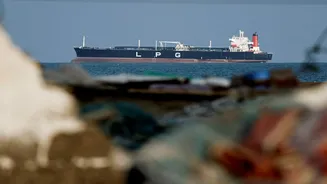
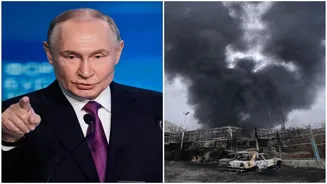
U.S. President Donald Trump has called on approximately seven nations to deploy warships to ensure the safety of the Strait of Hormuz as Iranian strikes
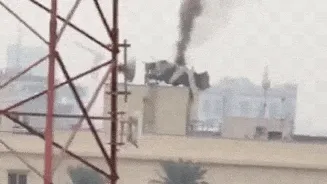
continue to target Gulf countries. This appeal comes amidst rising tensions in the region. Meanwhile, operations at Dubai International Airport, the busiest airport globally, have resumed gradually following a drone attack that ignited a fire in a fuel tank. Authorities reported that the incident was swiftly contained with no injuries reported.
Iran Accuses U.S. of Military Operations
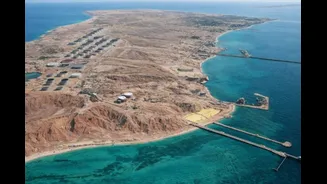
Tehran has alleged that the United States is utilizing “ports, docks and hideouts” in the United Arab Emirates to launch strikes on Kharg Island, which is critical for Iran's oil exports. As a result of these tensions, Brent crude oil prices have surged, trading near $105 per barrel on Monday.Israeli Military Operations
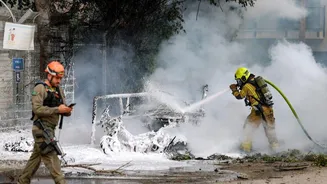
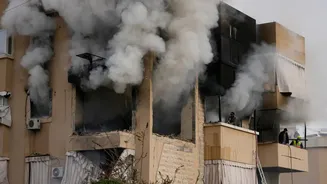
The Israeli military claims to have destroyed approximately 70% of Iran’s missile launchers in the initial two weeks of conflict. Military spokesperson Lt. Col. Nadav Shoshani indicated that while Iran continues to launch missiles at Israel, the frequency of these attacks has significantly decreased.Shoshani also stated that Israel has conducted around 7,600 strikes in Iran, successfully neutralizing 85% of the nation’s air defenses and targeting several Iranian nuclear facilities.
He affirmed that the military operations will persist “for as long as needed,” emphasizing that Israel remains prepared to strike thousands of additional targets.
China's Response to U.S. Request
A spokesperson for the Chinese government refrained from commenting directly on Trump’s request for military support to reopen the Strait of Hormuz. Instead, the Foreign Ministry reiterated calls for an end to hostilities, highlighting the implications for energy and goods trade.Trump expressed in an interview with The Financial Times that he expects a response from China prior to his upcoming trip to Beijing in about two weeks, suggesting that a delay may occur if no agreement is reached.
Drone Attacks and Casualties
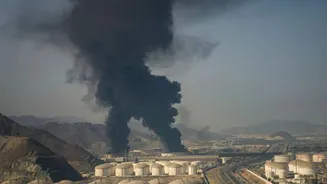
A drone strike resulted in a fire at an industrial oil facility in Fujairah, one of the seven emirates of the United Arab Emirates. Authorities confirmed that the fire was managed without any reported casualties.Additionally, a Palestinian civilian was killed in a missile attack in Abu Dhabi, raising the total death toll in the UAE to seven since the conflict began on February 18.
EU's Naval Mission Consideration
The European Union is contemplating two types of naval missions aimed at reopening the Strait of Hormuz. EU foreign policy chief Kaja Kallas stated that it is crucial to keep the strait open and that discussions are ongoing regarding possible actions from the European side.Kallas mentioned the potential expansion of the Aspides naval mission to include the Persian Gulf or the formation of a “coalition of the willing” with member states contributing military resources as needed.
Saudi Arabia's Defense Actions
Saudi Arabia reported intercepting three drones over Riyadh and its oil-rich western region on Monday morning. The Defense Ministry confirmed that no casualties or damage occurred.In total, more than 60 drones were reported to have targeted the kingdom within a short time frame.
Flight Operations at Dubai Airport
Following the drone strike, Dubai International Airport has slowly resumed limited flight operations. The Dubai Civil Aviation Authority announced that flights to selected destinations are now operational, while Emirates airline confirmed the resumption of limited services.However, all flights at the airport remain suspended until further notice as authorities work to restore full operations.
Brent Crude Oil Prices
Brent crude oil prices have been trading near $105 per barrel, showing a 1.6% increase to $104.73. This price marks a rise of over 40% since the onset of the conflict.Stock prices in Asia exhibited mixed results, while U.S. futures showed gains.
Regional Developments
In a phone conversation, Saudi Crown Prince Mohammed bin Salman and UAE President Mohamed bin Zayed Al Nahyan addressed the escalating regional tensions, condemning the Iranian attacks against Gulf Cooperation Council nations as a significant threat to regional stability.Authorities have also closed the main road and tunnel leading to Dubai International Airport following the drone strike, advising drivers to utilize alternative routes.
Australia's Position on Military Support
The Australian government has announced it will not send a warship to the Middle East to help keep the Strait of Hormuz open. Transport Minister Catherine King stated that Australia has not received such a request and emphasized that the nation is not taking offensive action against Iran.Despite this, Australia confirmed it would provide the UAE with an air force surveillance jet and air-to-air missiles for defense against Iranian attacks.