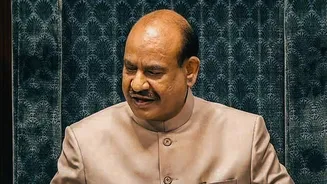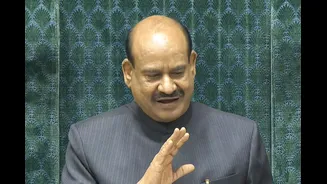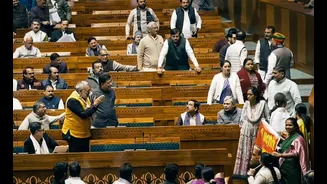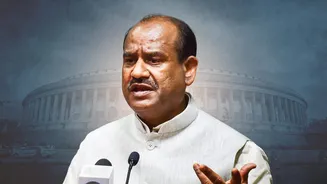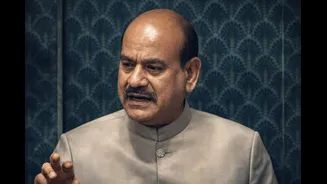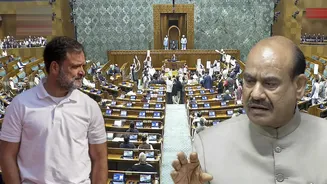








New Delhi: In another Government vs Opposition showdown in the Parliament, the Congress on Tuesday submitted a no-confidence motion notice against the Lok
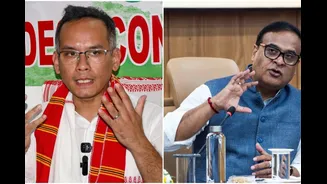
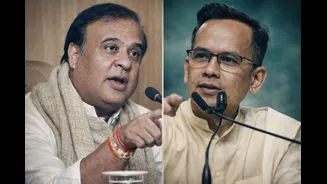
Sabha Speaker Om Birla, alleging him of “blatant partisan” conduct and not allowing members of the Opposition to speak in the chamber, especially after the Rahul Gandhi incident when the Leader of Opposition (LoP) wanted to quote from a memoir from former Army Chief General MM Naravane’s unpublished book 'Four Stars of Destiny'. Speaking on the development, Congress MP Gaurav Gogoi said that they have submitted a motion for a no-confidence motion against the Speaker under rule 94C rules and procedures. The Opposition MPs alleged "blatantly partisan" conduct and that leaders of opposition parties were not allowed to speak, according to sources. Sources said the notice of motion of no-confidence cited four incidents against the Speaker, including the Opposition's allegation that Lok Sabha LoP Rahul Gandhi was not allowed to speak in the House during the discussion on the motion of thanks to the President's Address. They added that the Opposition MPs also flagged the suspension of eight MPs, BJP MP Nishikant Dubey's "objectionable and personalised attacks" against former Prime Ministers and Speaker Om Birla's statement, where he said he had urged Prime Minister Narendra Modi not to come to the House to prevent any unpleasant incident, after receiving information that some Congress MPs could come to the PM's seat and "resort to an unprecedented incident". Congress member and chief whip K Suresh submitted the notice to the Lok Sabha secretariat on behalf of several opposition parties, including his party, Samajwadi Party, and DMK. TMC MPs, however, did not sign the notice.
How a No-Confidence Motion Against Lok Sabha Speaker Works?
- The Article 94 (C) of the Constitution allows a House Speaker to be removed through a duly followed process.
- To remove a Lok Sabha Speaker, a resolution has to be passed by a majority of all the then members.
- Before a motion is taken to remove the Speaker, a 14-day written notice is mandatory to the House.
- Any Member of Parliament (MP) can submit a written notice with the content of the resolution to the Lok Sabha Secretary General.
- Once this process is followed, the motion is then listed for consideration, in this case, by the Deputy Speaker’s chair.
- To validate the process, a support of at least 50 MPs is required for the motion to be admitted.
- Once a motion is admitted, it is put to a voice vote. If the House witnesses a division, it is put to a proper voting.
- The lawmakers, who intend to bring a no-confidence motion against the Speaker, must be specific, factual, and free from defamatory or vague allegations.
- Article 96 of the Constitution bars a speaker or a deputy speaker from presiding over the House sitting while a resolution for his removal from office is under consideration.
- The speaker has a constitutional right to defend himself in the House if the resolution is discussed in the Lok Sabha.
Does Opposition have numbers to pass no-confidence motion?
- In order to remove the Lok Sabha Speaker, the Opposition has to manage passing a resolution by an effective majority of the House.
- This effective majority means that the resolution must be passed by all the then members of the House, which means more than 50 per cent of the total strength of the lower house, excluding any vacant seats.
- The motion can be admitted if it has a minimum majority of at least 50 members of the House.
According to the current strength of the Lok Sabha — the 18th Lok Sabha — an effective majority would mean that the Opposition will have to manage at least 272 out of 543 members to be able to pass the no-confidence motion.
But if we look at the numbers, the ruling Bharatiya Janata Party (BJP)-led National Democratic Alliance (NDA) has a current House strength of 293 members, while the Opposition is at 238. Now, looking at the current numbers, it is highly unlikely that the Opposition will be able to get through a no-confidence motion.
While 118 Opposition MPs have signed the notice, sources have said that Rahul Gandhi, did not sign the notice of no-confidence motion, as it is not proper for the LoP to sign a petition for the removal of the Speaker in a parliamentary democracy.
The motion had the support of the Samajwadi Party and the Dravida Munnetra Kazhagam (DMK). Sources earlier said the party had clarified that it has enough MPs to submit a no-confidence motion notice. "Even if one or two parties do not support it, Congress intends to move the motion within the constitutional timeframe."
On the other hand, the Trinamool Congress has asked the Congress to file an appeal with the Speaker before moving a no-confidence motion against him, if the appeal fails, the party will sign the no-confidence motion.
Om Birla not to preside over Lok Sabha proceedings till matter settles
Following these developments, Lok Sabha Speaker Om Birla on Tuesday decided on moral grounds that he will not attend the proceedings of the House till the disposal of the no-confidence motion notice against him, sources informed.
Meanwhile, the Speaker has directed the House Secretary-General to examine the notice and take appropriate action, according to sources.
A look at No-Confidence Motion In History Against Lok Sabha Speakers
Three Lok Sabha speakers – G V Mavlankar (1954), Hukam Singh (1966) and Balram Jakhar (1987) – had faced no-confidence motions in the past, which were negatived.
With inputs from PTI